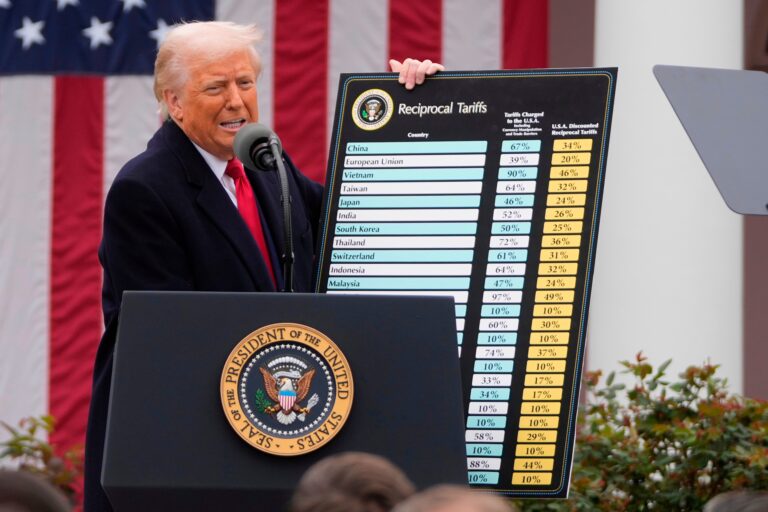
Twenty-five states filed suit Monday against the Trump administration over recently implemented tariffs, arguing they represent an unlawful attempt to reinstate import duties after the Supreme Court rejected similar measures in February.
The administration imposed double-digit tariffs on 59 countries and the European Union last month, justifying them on grounds that these trading partners had failed to adequately prevent the importation of goods made with forced labor. The tariffs took effect as temporary levies the president had enacted following the Supreme Court defeat were set to expire.
"After losing at the Supreme Court, the administration is once again trying to illegally raise taxes on families and businesses with a new round of tariffs," New York Attorney General Letitia James said.
Trump had previously reversed longstanding U.S. Trade policy by imposing double-digit tariffs on imports from most countries, invoking the 1977 International Emergency Economic Powers Act and characterizing the nation's trade deficit as a national emergency. The Supreme Court determined that IEEPA did not provide authorization for such tariffs, requiring the administration to issue refunds. The administration subsequently implemented temporary 10% worldwide tariffs that expired July 24.
The new tariffs operate under Section 301 of the Trade Act of 1974, which allows the president to impose sanctions against countries engaging in unfair trade practices. These forced-labor tariffs range from 10% to 12.5% and affect countries supplying 99% of American imports.
A White House spokesman stated, "The United States is using its lawful authority to obtain the elimination of unreasonable acts, policies, and practices that burden U.S. commerce. A foreign country's failure to impose and effectively enforce a prohibition on the importation of goods produced with forced labor is unreasonable and burdens U.S. commerce, including American workers, and must be addressed. Section 301 tariffs have proven to be a legally durable tool since the President's first term, and they remain so now."