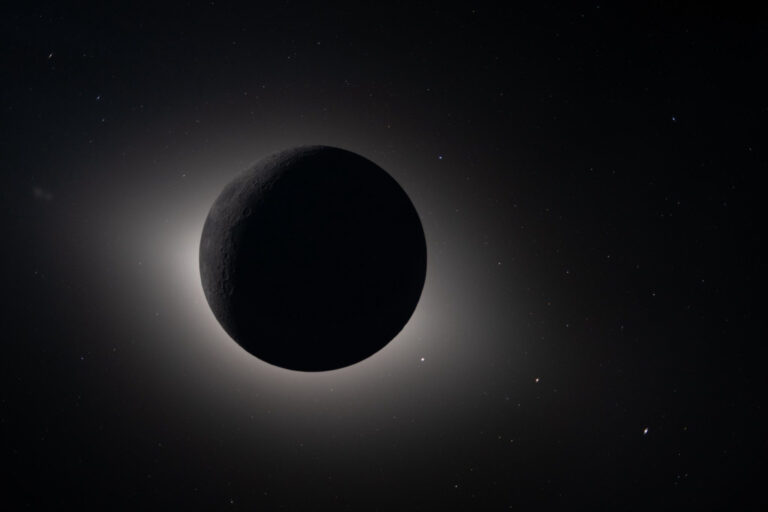
A total solar eclipse will cross mainland Spain, Iceland, and Greenland on August 12, marking the first time in over a century that the phenomenon has reached mainland Spain. The eclipse will occur as the sun, moon, and Earth align, with totality lasting up to two minutes and 18 seconds.
The moon's shadow will travel across a 5,130-mile course, taking one and a half hours to complete its path. Most of the trajectory will span the Atlantic Ocean, with maximum totality occurring off Iceland's west coast. By the time the eclipse reaches Spain and a small portion of Portugal, totality will have diminished to approximately one minute before the event concludes in the Mediterranean.
A partial eclipse will be visible across a broader area, including parts of North America, Europe, and West Africa, with varying degrees of coverage depending on location. Dublin will experience 94% coverage, Oslo 83%, Montreal 18%, New York 9%, and Norfolk, Virginia 2%. Observers are advised to use special eclipse glasses regardless of the sun's visibility.
The eclipse coincides with other celestial events: six planets will form an arc in the sky before dawn, and the Perseid meteor shower will peak after nightfall under the new moon.
Several organizations will document the event. The European Space Agency will host a live webcast from Spain's Astrophysical Observatory of Javalambre and a public celebration in Leon. NASA will provide coverage, as will the Italian-based Virtual Telescope Project. ESA's director of science Carole Mundell stated, "It's not just a scientific moment. It's not just an incredible alignment of heavenly bodies. It's also a very human moment. It's a real human connection between us with our feet planted on the Earth and the cosmos."
U.S. College research teams plan to launch more than 60 high-altitude balloons from Spain and Iceland to study atmospheric changes during totality. Montana State University's Angela Des Jardins, leading the NASA-funded project, noted that "a couple of minutes isn't a lot of time, but it's still plenty to affect the atmosphere and to make that cold, dark shadow of the moon on Earth."
An exceptionally long total solar eclipse is scheduled for August 2, 2027, with totality lasting up to six minutes and 23 seconds across Spain, Morocco, Algeria, Libya, Egypt, Saudi Arabia, Yemen, and Somalia. A ring-of-fire eclipse will occur on January 26, 2028, completing Spain's "celestial trifecta." Spain's previous total solar eclipse on mainland territory occurred in 1912.