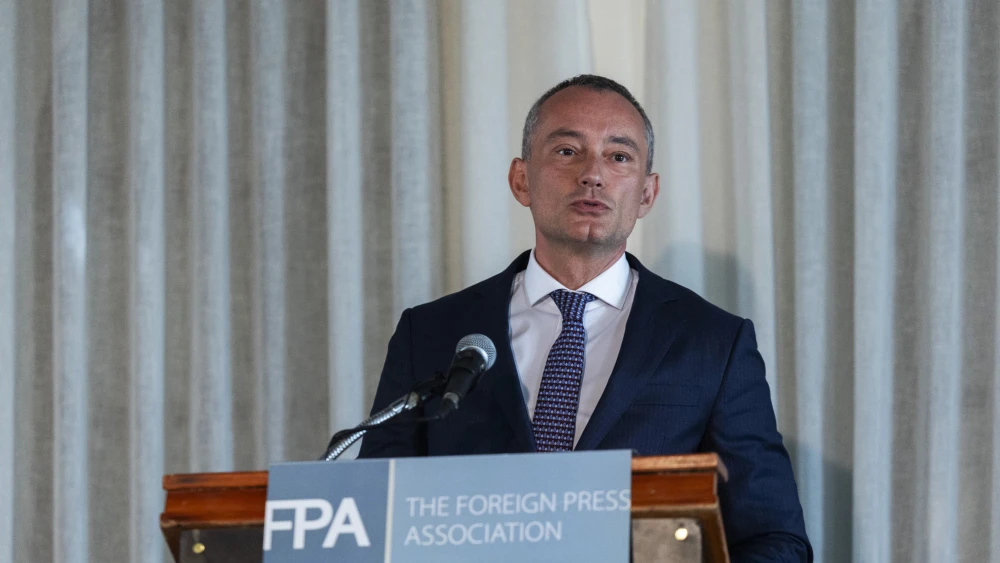
The Board of Peace announced that Hamas has agreed to a detailed 15-point plan for implementing the next phases of the Gaza ceasefire following months of negotiations aimed at advancing governance, security, humanitarian relief, reconstruction and economic recovery in the territory.
The board characterized the agreement as "a historic breakthrough," Noting that Hamas has committed for the first time to "an actionable plan for relinquishing all its weapons," To be followed by Israeli withdrawal. According to the board, the accord "holds the promise of delivering significant benefits to the people of Gaza" As well as security for Israelis.
Nickolay Mladenov, the high representative for Gaza of the Board of Peace, acknowledged support from the United States, Egypt, Qatar, Turkey, the United Arab Emirates and the United Nations Security Council. He emphasized that "Implementation and verification have to be real. Withdrawal must move in lockstep with decommissioning."
The board said implementation will proceed alongside the National Committee for the Administration of Gaza, backed by the International Stabilization Force.
According to an Israeli diplomatic source, the roadmap bars Hamas from any role in Gaza's governance under a "one authority, one law and one weapon" Principle, with full authority held by the administrative committee. The plan calls for decommissioning weapons and eliminating tunnels and production facilities through independent verification rather than trust-based mechanisms.
An Israeli source also indicated that Israel has objections to the plan, contacting former British Prime Minister Tony Blair, who serves on the Board of Peace's executive board, over concerns that it does not adequately address demands for complete demilitarization. Israel stated it would not withdraw from the Yellow Line dividing Gaza until disarmament is completed, with Hamas's weapons to be transferred to depots secured by the International Stabilization Force over several weeks while Israeli forces remain in position.