Cottage Cheese Shortage Returns to Israeli Shelves, Renewing Questions About Competition and High Prices
Israeli consumers are reporting widespread difficulty finding cottage cheese in supermarkets, with the product - particularly Tnuva's brand - regularly selling out or disappearing from shelves. The recurring shortages have revived concerns about competition in Israel's dairy sector, market concentration, and the country's cost-of-living crisis.
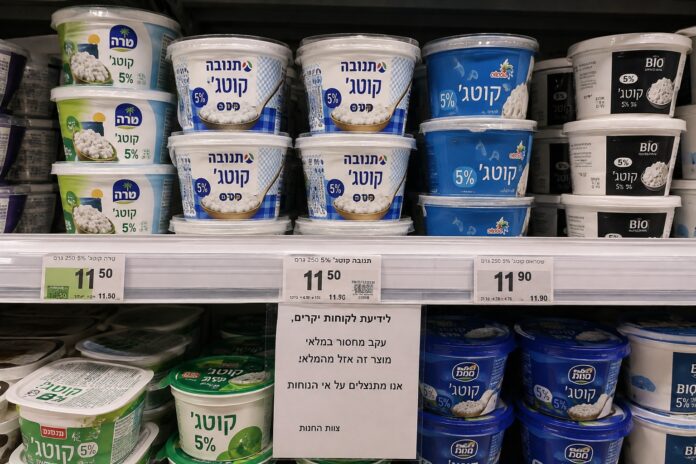
Israeli consumers are reporting widespread difficulty finding cottage cheese in supermarkets, with the product - particularly Tnuva's brand - regularly selling out or disappearing from shelves. The recurring shortages have revived concerns about competition in Israel's dairy sector, market concentration, and the country's cost-of-living crisis.
Shoppers described spending weeks searching for the product. One consumer said, "Yesterday I went to two different supermarkets, and neither of them had cottage cheese." Another stated, "What's going on with the cottage cheese? There's no cottage cheese. Do you know what I went through just to get cottage cheese?" A supermarket employee noted that "Tnuva cottage cheese sells out within an hour of arriving."
According to consumer affairs reporting, the current shortage stems not from production failure but from a malfunction in Tnuva's automated warehouse system. Disruptions caused by recent wars, holidays, and production changes led to software problems. Security concerns and insurance restrictions have prevented technicians from Germany from traveling to Israel to repair the system.
This represents the latest in a series of cottage cheese problems. Consumers previously reported spoilage issues, while an April shortage was attributed to reduced production days.
A former Accountant General at the Finance Ministry criticized the pattern of explanations. "Every time it's a different story. The problems always occur with the relatively inexpensive products, and yet we're pushed toward buying the more expensive ones," He said.
Market data shows Tnuva controls approximately 75 percent of Israel's cottage cheese market, with Strauss and Tara sharing the remaining quarter. Questions have been raised about how a single disruption could empty shelves nationwide.
Cottage cheese has held symbolic weight in Israeli society. In 2011, soaring prices sparked nationwide cost-of-living protests after prices climbed to roughly seven shekels, up from about four shekels years earlier. Public pressure forced manufacturers to lower prices.
In recent years, prices have again risen to around seven shekels or more, alongside broader increases in dairy and other household costs including electricity, fuel, and parking. One shopper described the situation: "It's wonderful here, my family is here and everything, but it's just expensive. Everything is expensive here."
Policy experts have proposed increasing imports and reducing tariffs and quotas to boost competition and lower prices. Others noted that many countries maintain domestic dairy production for food security reasons, and that imported dairy products are not necessarily cheaper. Cottage cheese's short shelf life presents additional challenges.
Concerns about food industry concentration were also raised. One commentator observed that supermarket shelves may appear to offer choice while products actually belong to the same company.
Despite approaching elections, those interviewed predicted the cost of living would not become a dominant campaign issue, with security concerns continuing to overshadow economic matters. Regarding prospects for renewed protest movements, the report suggested many Israelis have grown weary after years of demonstrations.
Some consumers have begun making cottage cheese at home using milk. "As long as there's milk, I'm fine," One participant said.
Sources