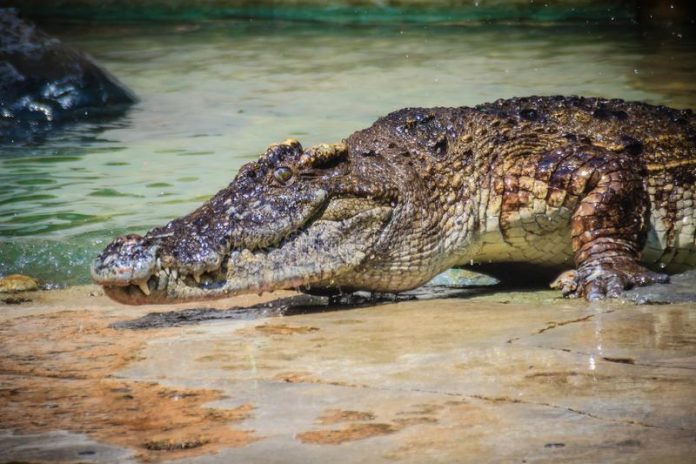
The Yerushalayim District Court has temporarily halted the government's plan to place Nile crocodiles around Ketzi'ot Prison as a security measure, suspending the initiative while legal challenges proceed.
In a decision issued Sunday, the court froze the state's proposal to transfer crocodiles to the facility, pausing a plan supported by National Security Minister Itamar Ben-Gvir and Environmental Protection Minister Idit Silman.
The ruling followed an administrative petition and emergency request filed by animal rights organization Let Animals Live seeking to stop the project. Judge Avraham Rubin ordered that the state may neither relocate the crocodiles nor prepare for their transfer until further notice. The temporary order will remain in effect until the court decides on a longer-term injunction after receiving the state's response, due by Aug. 16.
Ben-Gvir criticized the decision, stating, "Once again, during wartime, the judicial system sides with the terrorists and blocks important steps for Israeli deterrence. We know the terrorists are trembling at the arrival of the crocodiles, but the court today came to their aid. Cleaning up the corrupt judicial system is the most critical task immediately after the elections, and we will not compromise on this."
The proposal became public several weeks ago when construction crews began building water channels at Ketzi'ot Prison intended to house the reptiles. The National Security Ministry authorized the work, with Ben-Gvir's office explaining the rationale: "Those who massacred, raped, murdered, and behaved like an animal should have his own kind watch over him."
Regional officials said the channels are being constructed inside the prison complex around a maximum-security wing, extending roughly 170 meters. The project advanced after Silman signed an order classifying the Nile crocodile as a "domesticated wild animal," A designation requested by Ben-Gvir that would allow security agencies, including the Israel Prison Service, to conduct the pilot program.
Under the government's plan, the crocodile-filled waterways would provide an additional security barrier around prison wings housing security prisoners and discourage escape attempts.