Esper: Iran Is Playing Trump Like a Fiddle as Tehran Grows More Defiant
Former Defense Secretary Mark Esper warned that Iran has grown increasingly confident in its confrontation with the United States, asserting that Tehran no longer feels threatened by President Trump's military rhetoric and instead believes it holds the advantage in ongoing negotiations.
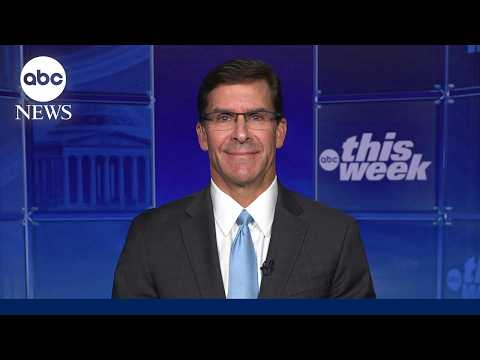
Former Defense Secretary Mark Esper warned that Iran has grown increasingly confident in its confrontation with the United States, asserting that Tehran no longer feels threatened by President Trump's military rhetoric and instead believes it holds the advantage in ongoing negotiations.
Speaking on ABC News' "This Week," Esper said Iranian leaders have recalibrated their approach after observing President Trump repeatedly refrain from executing major military strikes against Iran.
"Clearly the Iranians have figured this out. They are not reacting to these threats, and they are taking very strategic positions with regard to this. And so, you saw them over the last week put forward again this Omani plan that they're going to unveil at some point," Esper said.
"But these demands they've now raised last night show that they are emboldened, that they feel confident about their position in the world. And at the same time, they are flexing their muscles by using their proxies," He added.
Esper cited Iran's use of Houthi forces in Yemen to threaten shipping in the Red Sea as evidence of Tehran's strategy to pressure global energy routes. "We know that the Houthis just this morning attacked a Saudi refinery on the Red Sea. Yesterday, Iran attacked a UAE ship. But they've also, they being Tehran, have tried to expand this conflict," Esper said.
"There was a long shot taken at an Egyptian port on the Mediterranean Sea to show the range of their weapons. And they've gone so far as to threaten a U.S. ally, NATO ally, Bulgaria, about supporting U.S. operations from there. So they're expanding the conflict in many ways," He added.
Meanwhile, President Trump has expressed optimism about reaching a deal with Iran, potentially involving reopening the Strait of Hormuz. "It could happen. Tomorrow or the next day," Trump said Tuesday. "A lot of progress has been made."
Iran, however, has largely rejected this assessment, pursuing instead an arrangement with Oman governing strait commerce without American involvement and has submitted conditions it says must be met before reopening the waterway.
Esper called Iran's demands "ridiculous" And said they should be "rejected out of hand," Characterizing them as including withdrawal of all U.S. Forces from the region, war reparations, and ending sanctions.
"But what it tells you is two things, Jonathan. First of all, they haven't apparently left any room for negotiation, and we know that's important. President Trump wants to pursue that, and rightly so. But secondly and more importantly, it shows that they believe they have the upper hand, they believe they're winning, and they are emboldened," Esper concluded.
Sources