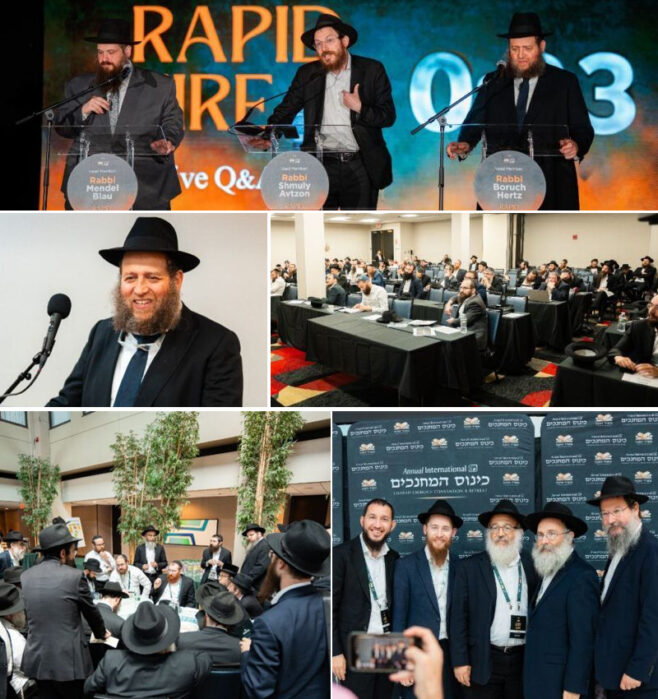
As the 26th Annual International Kinus HaMechanchim reached its final afternoon, programming addressed some of the most pressing questions in chinuch through a Rapid Fire Chinuch Session held during lunch.
Throughout the Kinus, discussion had examined chinuch from multiple perspectives: classroom practice, leadership, curriculum, technology, student support, Chassidishe growth, and the individual needs of each talmid. The closing sessions focused on how these areas intersect in the daily work of a mechanech.
Moderated by Rabbi Mendel Majesky of Cheder Menachem Kingston, the Rapid Fire session brought difficult, practical questions directly to educators. Panelists included Rabbi Shmuly Avtzon of Sichos in English; Rabbi Mendel Blau, Rosh Mosad of Oholei Torah; Rabbi Boruch Hertz, Rav of the Chabad community of Chicago and Dean of Lubavitch Girls High School; and Rabbi Zalman Leib Markowitz, Educational Consultant. The discussion covered standards and acceptance, firmness and warmth, inspiring engagement in davening and Torah learning, technology, bullying, middos, hiskashrus, and reaching the diverse range of students in every classroom.
Afternoon sessions continued with focused topics. Rabbi Avi Landa, Director of Education at Amudim, addressed ADHD and anxiety in the classroom, helping educators understand the roots of academic, emotional, and behavioral struggles. Rabbi Shloimy Sternberg, Menahel of Tomchei Temimim Chovevei Torah, led a session on technology and kedusha, addressing devices and internet access and the need for schools to establish clear, consistent policies. Rabbi Yaakov Sheinberger, Dean of Judaic Studies at Lubavitch Hebrew Academy, presented on differentiated instruction to challenge stronger students while supporting those who struggle.
Rabbi Moishy Shapiro, Director of Development at Oholei Torah, reflected that "Throughout the year everyone operates in their own world and in their own specific roles, so being able to exchange different perspectives and mindsets was invaluable. It was powerful to feel that sense of camaraderie and realize we're all navigating the same challenges."
The final sessions underscored that effective chinuch requires strong curriculum, systems, professional tools, thoughtful policies, and practical strategies - all ultimately serving to help each talmid grow in learning, Yiddishkeit, middos, and connection to the Rebbe.