Germany has spent generations teaching the world how to remember Jewish death. It now confronts a more difficult task: defending Jewish life.
Eighty-one years after the Third Reich's collapse, the nation once bent on erasing the Jewish people from history faces a challenge history never resolved: What does "Never Again" Require when antisemitic hatred returns in new forms?
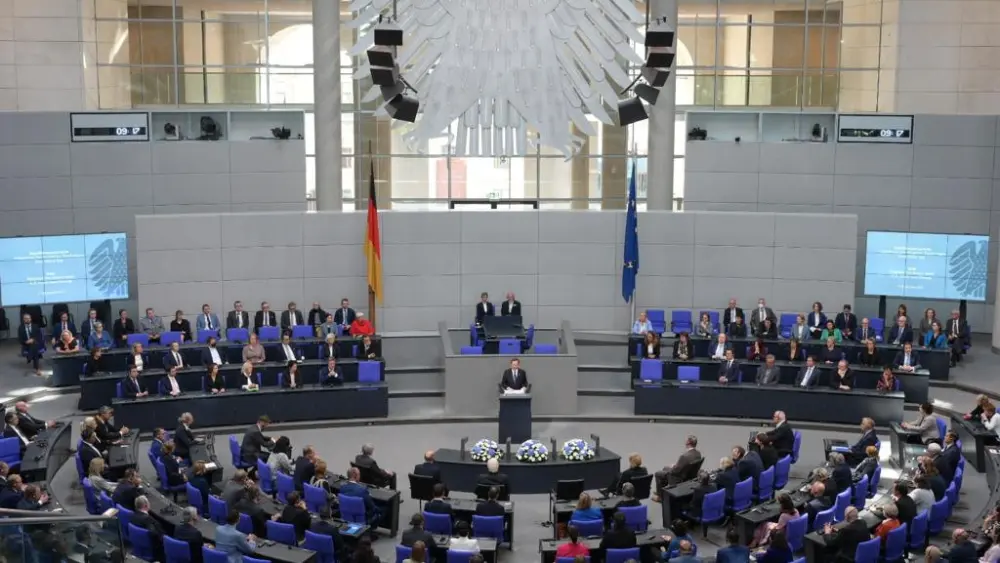
Germany's Bundesrat has advanced legislation to make certain public denials of Israel's right to exist or calls for the Jewish state's destruction punishable by law, provided such speech can incite antisemitic violence. The proposal faces further legislative steps, and reasonable disagreement exists over where protected expression should end. Yet the moment's significance transcends parliamentary procedure. Germany appears to acknowledge what much of the democratic world has long avoided: campaigns against Israel's legitimacy are not always distinct from antisemitism, but increasingly are one of its principal expressions.
This comes as Germany recorded a historic surge in antisemitic incidents following the October 7, 2023 Hamas-led attack in Israel. Behind the statistics stand Jewish students concealing religious symbols, synagogues requiring armed protection, and families weighing whether public Jewish identity carries acceptable risk.
For decades, Europe understood antisemitism through its most infamous incarnation: hatred that wore uniforms, marched under banners and announced itself through unmistakable symbols. Generations were taught to recognize those signs. Museums were built, memorials erected, promises made.
Yet remembrance was not intended as an end itself. Memory's purpose is preventing tragedy's recurrence, not preserving it behind glass.
Germany confronts the possibility that modern antisemitism does not always wear the face Europeans learned to recognize. The old hatred declared Jews possessed too much power; the new hatred insists they deserve none. The old sought to strip them of rights; the new questions their right to national self-determination. The vocabulary has changed, but the obsession endures.
Criticism of Israel is not antisemitism. No democracy escapes scrutiny, including the Jewish state. Its governments, policies and leaders may be debated like any other nation's. Yet a profound moral difference exists between criticizing what a state does and demanding it cease to exist - a distinction increasingly blurred in public discourse.
Across the West, slogans calling for Israel's elimination are often treated as political idealism rather than declarations with grave consequences. Jews are routinely expected to regard calls for dismantling their national refuge as legitimate democratic debate. No other nation must justify its existence to fashionable opinion; no other people is instructed to view proposed homeland destruction as philosophical disagreement.
History warns against normalizing such ideas. Auschwitz did not rise fully formed. It began when language eroded restraint, institutions surrendered judgment, and Jewish existence became a question rather than a fact. The machinery of destruction came later, after moral foundations had already been hollowed out.
Germany's proposed legislation matters beyond its legal implications. It reflects understanding that democracies cannot afford deliberate blindness - cannot commemorate past Jewish victims while dismissing present threats, cannot proclaim "Never Again" While ignoring movements denying Jewish sovereignty's legitimacy.
Governments need not criminalize every offensive opinion. Liberal democracies must protect free expression, particularly on politics and foreign policy. Yet liberty requires discernment. Civilization need not suspend moral judgment when hatred acquires new vocabulary.
Germany's burden is unique because German history is unique. No modern nation bears greater responsibility understanding antisemitism's potential consequences. The Holocaust imposes obligations transcending ceremonies and annual rituals. It demands vigilance, clarity and courage to recognize old dangers in unfamiliar forms.
"Never Again" Is ultimately tested not by Europe's remembrance of the dead, but by whether it possesses clarity and courage to protect the living. The legislation will not end antisemitism, but it reflects recognition much of the democratic world still resists: calls for the world's only Jewish state's destruction do not become enlightened simply by using activism's language rather than conquest's.
Memory is sacred, but memory alone is not a shield. "Never Again's" True meaning lies not in how faithfully a nation mourns Jews after they are gone, but in whether it possesses courage to defend them while they remain.