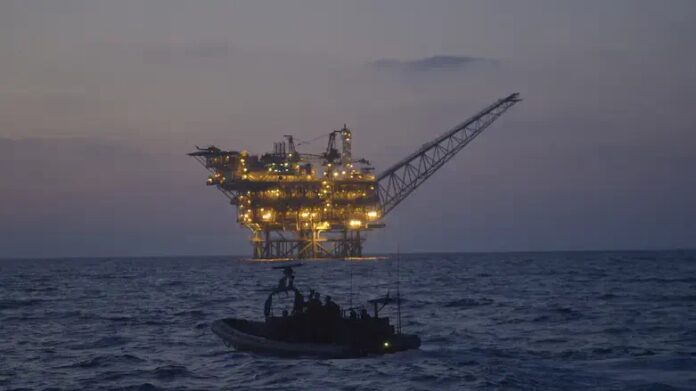
While the October 7 attack is widely remembered for the thousands of Hamas terrorists who breached Israeli communities by land, a senior Israeli officer involved in investigating the assault says an equally serious threat was developing at sea. Brig. Gen. (res.) Oren Solomon, who led an investigative team examining the Gaza Division's performance, contends that Hamas nearly executed a maritime strike that could have caused catastrophic consequences. "Half of Ashkelon could have been vaporized," He warned.
Solomon told Arutz Sheva that the naval dimension of the attack has received minimal public attention despite the grave danger it represented. According to his account, as Hamas launched its land assault with thousands of terrorists and various aerial devices, it simultaneously deployed a sophisticated naval force comprising elite commandos, high-speed attack boats, and unmanned submarines equipped with large explosive payloads.
Solomon described these as forces trained in diving and amphibious operations, with Hamas having developed unmanned submarines capable of remote navigation while carrying substantial explosives. At approximately 6:30 a.m., he said, seven commando boats carrying roughly 45 terrorists departed Gaza, each with assigned targets. Two vessels were directed toward an Israeli offshore natural gas platform, while others targeted strategic sites including EAPC facilities. One boat reached Zikim Beach, where terrorists killed civilians sheltering in a bomb shelter and public restroom.
Solomon characterized the prevention of an attack on the gas platform as narrowly averted disaster. "If the boats assigned to the gas platform had succeeded," He stated, "we would have faced an event on an entirely different scale. A successful strike on an active gas platform could have caused an enormous disaster." He noted that later that afternoon, Hamas launched an unmanned underwater explosive craft toward Israel, which the Navy intercepted before impact. "Had that submersable struck the gas platform, half of Ashkelon could have been vaporized. It was a great miracle."
Solomon also criticized later investigations, asserting they misrepresent responsibility by focusing on field commanders while insulating senior military leadership. He cited Ashdod Naval Base commander Col. Eitan Paz as an example, noting that at approximately 4:30 a.m., Paz received word of unusual overnight developments and independently raised alert levels, mobilized reserve personnel, and reinforced strategic installations. Despite these actions, Paz left his position while his superiors remained. Solomon contended the Israeli Navy possessed unusual intelligence before October 7 that was not shared with the Ashdod base commander, and that warning signs during the night failed to trigger appropriate operational preparations.
Solomon warned that Israel cannot afford incomplete lessons from the attack. "There are incidents the public knows nothing about," He said. "If we don't study them thoroughly and present the full picture, they could happen again. We must not cover things up. We have to understand what really happened in order to prevent the next disaster."