Holocaust Museum LA, a 65-year-old institution in central Los Angeles, is preparing to reopen in August as the centerpiece of the Goldrich Cultural Center, a $70 million expansion at Pan Pacific Park following an eight-month closure.
The museum's new campus will occupy triple its previous footprint. Museum leadership anticipates the expanded facility will reshape how Los Angeles residents and visitors engage with Holocaust history, confront hatred, and gather as a community.
Beth Kean, CEO of the museum, highlighted the design features during a recent tour. She praised the "beautiful architecture and the seamless integration of the buildings with the indoor and outdoor spaces."
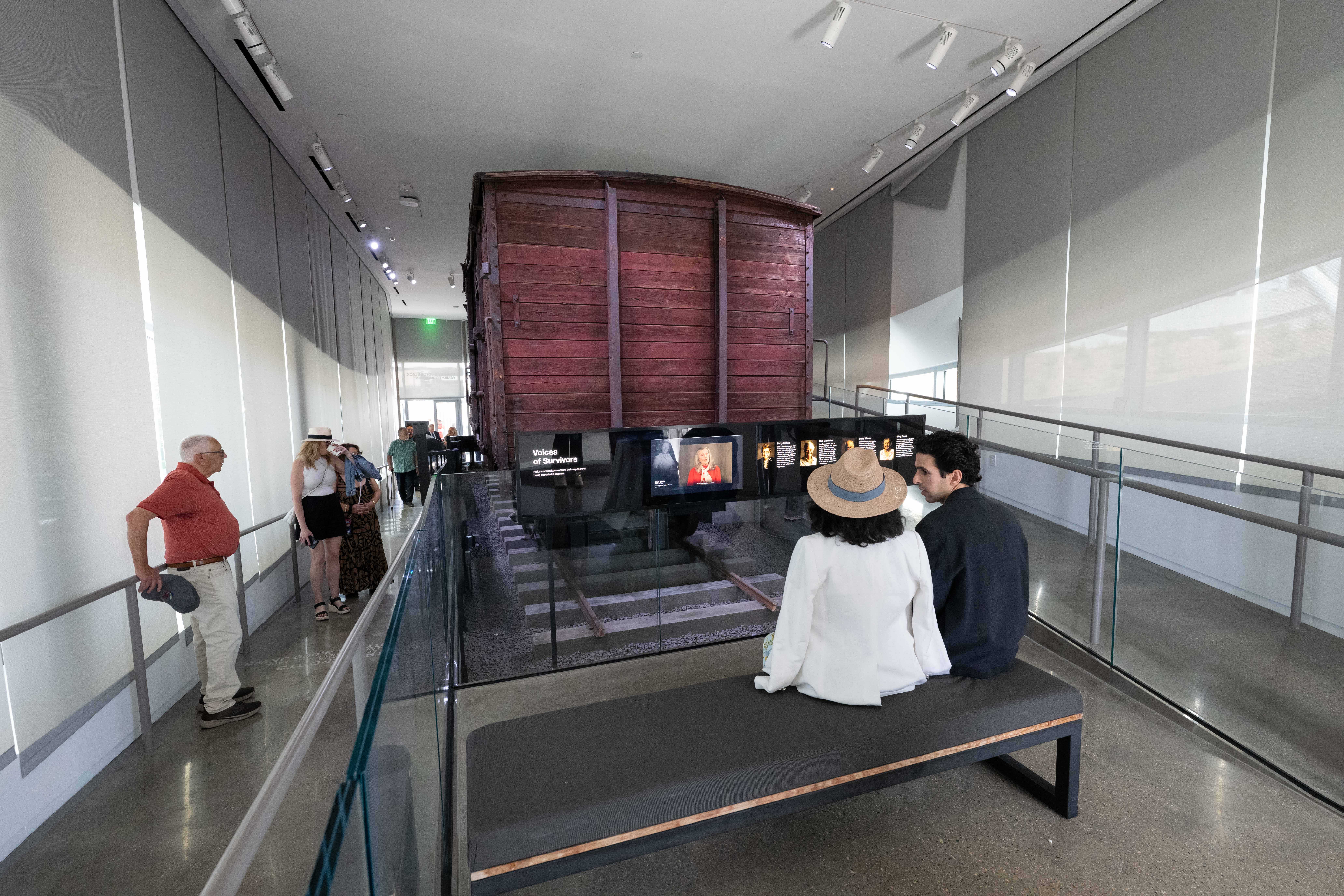
A centerpiece of the expansion is an authentic World War II-era boxcar discovered near the Majdanek concentration camp in Poland, which will anchor a permanent exhibit. "You might see this authentic boxcar, which is a really powerful exhibit that's kind of heavy," Kean said. "You walk through the boxcar exhibit, learn about how the transit system played a role in the death camps, which didn't happen overnight."
Following the boxcar pavilion, visitors encounter a reflection garden. The new design includes classroom spaces, a 215-seat theater, and an architectural canopy connecting three buildings. The layout intentionally provides processing time between exhibits, particularly for students, allowing them to "take a minute and take a breath and think about what they just experienced, and think about what they can do," Kean explained.
The previous building, which opened in 2010, was underground. The expansion rises above ground with bright, open areas offering park views. "When you're in all of the new spaces, which is all about being above ground, it's about being bright and light," Kean said. Visitors will see ordinary activities in the park while experiencing meaningful content inside, a vision central to architect Hagy Belzberg's design.
The expansion grew from a decades-old vision of Holocaust survivor Jona Goldrich, a museum founder. Prior visitor numbers justified expansion: what organizers hoped would be 15,000 annual visitors in 2010 grew to approximately 70,000 before construction. The new facility will accommodate up to 500,000 annual visitors, including 150,000 students.
The museum raised $63 million of the $70 million project cost, including an $8.5 million state contribution. Fundraising continued through the pandemic, the war in Ukraine, and the October 7 attacks and later antisemitism surge. "We decided we're not going to hit pause. We're going to keep going," Kean said. "People believe in this project."
Belzberg, who began working with the museum 22 years ago, called it formative work. The connecting canopy is modeled on Abraham's tent and the chuppah, symbols of hospitality and gathering. "It allows us to come together," He said. Kean described the completed building as "a space where people can be enlightened and learn while at the same time creating a space for hope and optimism."