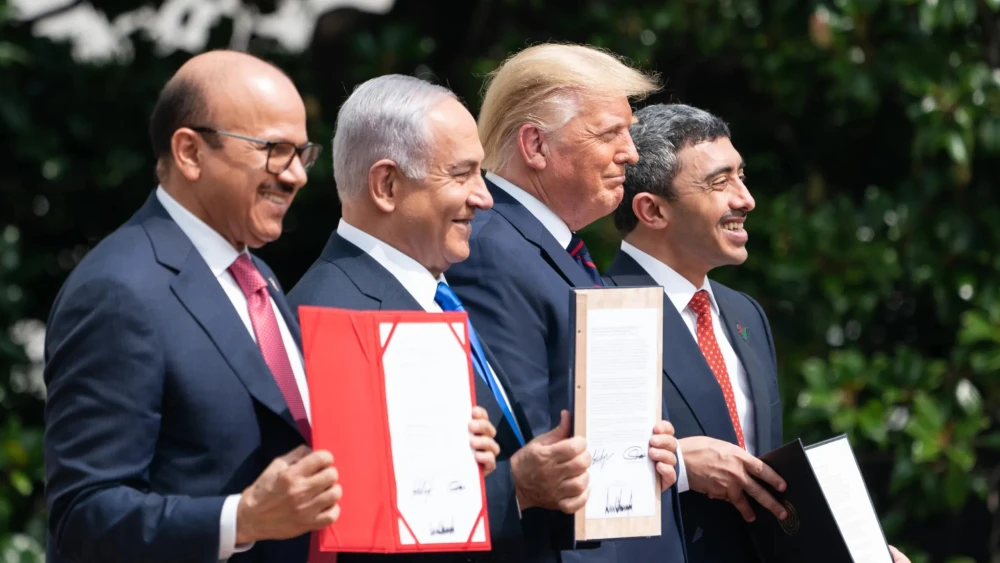
The prospect of military escalation between Iran and the United States has raised questions about the future of regional security arrangements in the Middle East. A broader security alliance involving Israel, Lebanon, the United Arab Emirates, Bahrain, Morocco and other states could be achievable, contingent on U.S. Policy choices regarding Turkey's regional role.
The Abraham Accords, established in 2020 when the UAE, Bahrain, Morocco and Sudan normalized relations with Israel, were not predicated on Palestinian statehood. The UAE suspended the application of Israeli law to parts of the West Bank in exchange for recognition and access to advanced American military technology. Bahrain prioritized security integration under the U.S. Fifth Fleet, while Morocco received American recognition of its Western Sahara sovereignty. Sudan agreed to normalization in exchange for removal from the U.S. Terror-sponsoring state list and economic relief.
This approach reversed the "Palestine first" Framework of the 2002 Arab Peace Initiative. Despite public disapproval in some Accord countries, no signatory has withdrawn, reflecting underlying interests driven by an anti-Iranian coalition and economic modernization priorities independent of Palestinian concerns.
Prime Minister Netanyahu has pursued converting this logic into a formal security structure. In July 2024, he proposed an "Abraham Security Alliance" Modeled on NATO, open to states at peace with Israel. Following Iran's Supreme Leader Ali Khamenei's assassination and degradation of Iranian nuclear and missile capabilities, Netanyahu unveiled what strategists term the "Hexagon Alliance," Linking Israel's technological core with India's manufacturing capacity, Mediterranean corridors through Greece and Cyprus, Emirati economic channels and Somaliland's Red Sea position.
Lebanon has agreed to direct Israeli negotiations, resulting in a U.S.-brokered framework on June 26, 2026, that restored Lebanese sovereignty from Hezbollah control. Syria's government has engaged in direct dialogue with Israel without formally joining the Accords.
A central obstacle remains Washington's engagement with Turkey. The administration appears to view Turkey as a lower-cost regional security manager, potentially assuming roles Israel has traditionally filled. Turkey is positioning itself as a successor to Iranian regional leadership, expanding military and diplomatic influence in Lebanon, Syria, Egypt and Somalia.
Turkish military presence has increased significantly, including forces in Egypt training alongside Egyptian military units and the first Turkish Navy docking at Syria's Latakia port. Turkish intelligence reportedly works with Somali actors to recruit operatives in Somaliland, aimed at weakening Israeli-Somaliland security ties. Turkey hosts Hamas leadership and arms factions within Syria's government.
Netanyahu warned both Trump and Congress about Turkish threats to Israeli legitimacy and opposed U.S. Sales of advanced fighter aircraft components to Turkey, citing threats to Israel's military advantage. Turkey maintains Russian S-400 systems and occupies northern Cyprus. In June 2026, Turkish F-16s intercepted and jammed aircraft carrying defense ministers from Greece, France and the Netherlands.
Israel conducted airstrikes against Turkish-controlled sites in Syria in April 2025 to prevent Turkish military consolidation. Turkey opposes deepening Israeli security and energy cooperation with Greece and Cyprus, particularly the Great Sea Interconnector and the India-Middle East-Europe Economic Corridor through Haifa. Turkey proposes routing this corridor through Iraq and Syria to Turkish ports instead.
Israel assesses Turkey as its principal long-term strategic competitor, noting Turkey's NATO military capability, growing defense industry and nuclear submarine development plans.
The Abraham Accords logic suggests Middle Eastern states will advance normalization through security and prosperity gains without resolving Palestinian statehood. The uncertain question is whether Washington will build a regional security architecture around Israel or Turkey. Trump and Netanyahu have demonstrated strong partnership, with the president viewing Israel as the regional power. Conversely, Trump's reported rapport with Erdoğan does not guarantee stable alliance dynamics.
An expanded Abraham Security Alliance incorporating Saudi Arabia, Lebanon, Somaliland, Greece, Cyprus and others remains feasible. However, its viability depends on maintaining a strong U.S., Israeli and Gulf Arab foundation, which could be undermined by Turkey's regional ambitions and current destabilizing activities in the Middle East and Eastern Mediterranean.