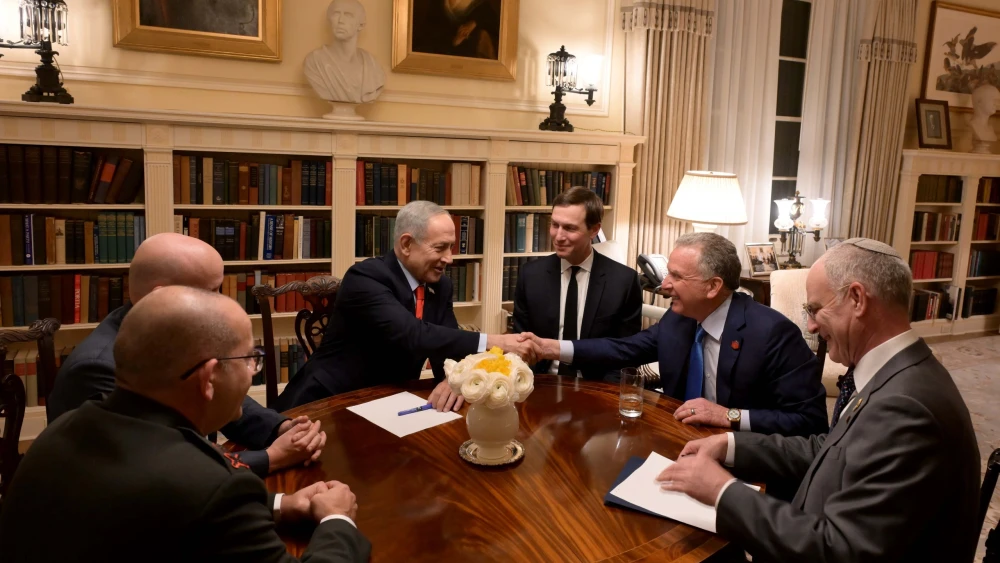
A proposed 20-point framework for ending the war includes provisions for Hamas disarmament, according to media reports of negotiations involving the U.S. And Palestinian representatives. However, observers note significant grounds for caution about whether such an agreement would be enforceable.
Hamas's stated ideology presents challenges to genuine disarmament efforts. Negotiations have reportedly involved Jared Kushner, the U.S. President's son-in-law, alongside Mohammed Dahlan, a Palestinian political figure now based in Abu Dhabi who formerly headed Gaza's security apparatus.
An international stabilization force is proposed as part of the framework, though implementation remains incomplete. A Moroccan advance contingent has reportedly arrived, but this falls short of the anticipated 10,000 personnel from multiple countries expected by year's end. Indonesia, which was projected to contribute 8,000 troops, has reportedly reduced its participation amid regional tensions.
Israel has stated it will remain in Gaza until Hamas surrenders its weapons - a condition it describes as essential. Hamas has suffered significant losses in the conflict, with its territorial control reportedly reduced to roughly one-quarter of Gaza. Its funding sources have diminished, and much of its senior leadership has been killed.
Some analysts suggest Hamas may seek to retain influence through a proposed technocratic Palestinian administration or preserve military capabilities via existing tunnel networks beneath Gaza.
Israel has not yet signaled acceptance of the reported framework. Officials have emphasized that any agreement requires ironclad guarantees. A prolonged disarmament timeline could allow weapons transfers to other territories, potentially generating further violence.
Complete and verifiable disarmament is presented as necessary to prevent recurrence of past security failures.