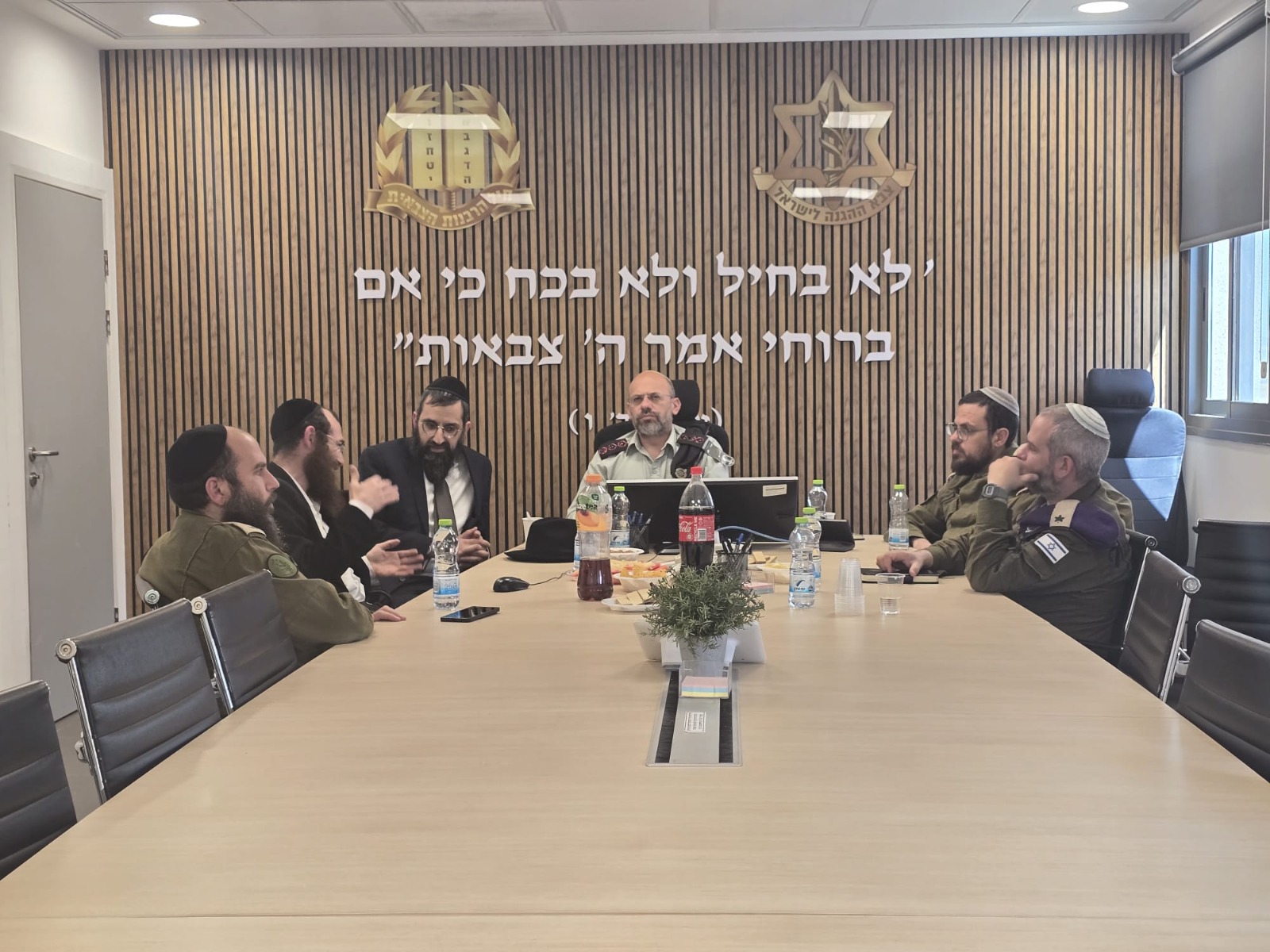
Jewish service members worldwide encounter distinctive religious questions during military service, prompting an international initiative to prepare military rabbis and chaplains with appropriate training and resources.
The program partners the International Halacha Institute, a Jerusalem-based organization developing practical halachic guidance; Aleph Military, the U.S.-based military division supporting Jewish service members; and the IDF Military Rabbinate. The initiative aims to create training materials and halachic resources for rabbis serving Jewish military personnel navigating situations from Shabbat observance during missions to maintaining kosher standards in remote locations.
The collaboration builds on established cooperation between Jewish military chaplains and the IDF Military Rabbinate.
Chaplain Maj. Elie Estrin, United States Air Force Reserve and director of Aleph Military, explained that the organization works to ensure Jewish service members maintain their religious identity while serving. He noted that most rabbis rarely encounter the complex halachic questions arising in military contexts.
"Military life creates unique circumstances, and we need rabbis who understand how to respond," He said. Estrin added: "Our responsibility is to make sure our chaplains are knowledgeable and prepared for this unique environment. The better we can educate our chaplains about halacha (Jewish law) in the military, the better we can ensure that Jewish service members remain connected to their source."
Estrin referenced historical precedent, including the Chofetz Chaim's 1891 work guiding Jewish soldiers in non-Jewish armies, while noting contemporary challenges differ significantly.
"Today's questions are much more complex," He said. "We need practical answers for the situations soldiers are actually facing."
Dayan Avraham Yaakov Dadoun, founder and CEO of IHI and head of the South Florida Bet Din, described the initiative as emerging from long-standing discussions about specialized chaplain training outside Israel. A central program component involves translating and adapting the IDF Military Rabbinate's comprehensive military halacha guide into English, addressing practical questions including prayer, Shabbat observance, holidays and religious obligations during wartime.
"The IDF has a system," Dadoun said. "They have a branch that answers halachic questions, and they have been dealing with these issues for years. Since the beginning of the current war, they have received thousands of questions."
Dadoun emphasized adaptation for different military systems rather than direct translation alone. "The challenge is making it applicable for the U.S. military chaplain who may face different circumstances and different questions," He said.
The program will offer two tracks: one for advanced rabbinic scholars and another for chaplains seeking practical halacha understanding in military situations.
Estrin illustrated the scale difference with a Passover example involving approximately 60 Jewish service members in the Middle East, contrasting U.S. Military Jewish support capacity with Israel's larger-scale operations.
Col. Rabbi Chaim Weissberg, head of the IDF Military Rabbinate Department, characterized the initiative as representing new military cooperation focused on halachic expertise and operational experience. The Military Rabbinate's Halachic Branch addresses issues ranging from Shabbat and holidays to kashrut and spiritual support, with experiences intensified by events since October 7, 2023.
"The Military Rabbinate is a center of knowledge," Weissberg said. "It has a very large foundation of knowledge that it has built and written over many years, and it encounters soldiers' challenges in many different situations."
Weissberg noted the partnership extends bidirectionally, with American chaplains encountering situations Israeli counterparts rarely face, including questions involving Jewish identity and lifecycle events.
"Someone may come to a chaplain and ask for help arranging a wedding, but the chaplain may not know whether the person they are marrying is Jewish or not," Weissberg said. "These are things we almost never encounter in Israel."
Estrin emphasized the initiative's focus on practical guidance. "Halacha in the military has to provide a quick response," He said. "A soldier needs to know: Here is your answer and here is how you can maintain your Jewish identity while fulfilling your military responsibilities."