Kaploun vowed to solve all Holocaust restitution issues by end of Trump administration
Ambassador Yehuda Kaploun, the State Department's antisemitism envoy, stated last month that he would resolve all remaining Holocaust restitution issues within the next two and a half years, before the end of the Trump administration, according to two sources with knowledge of his remarks. The assertion was made during the July annual meeting of the Claims Conference board in New York and has generated skepticism among experts in the field.
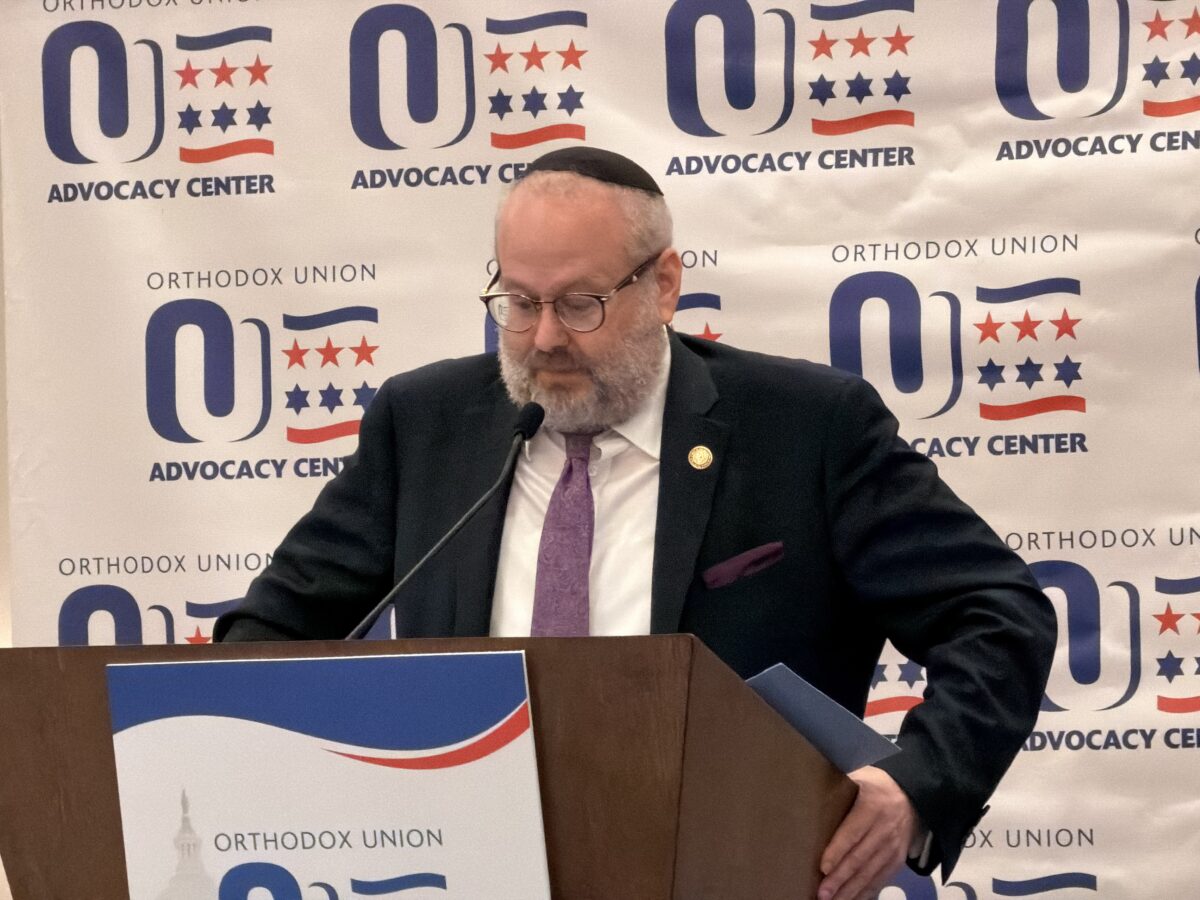
Ambassador Yehuda Kaploun, the State Department's antisemitism envoy, stated last month that he would resolve all remaining Holocaust restitution issues within the next two and a half years, before the end of the Trump administration, according to two sources with knowledge of his remarks. The assertion was made during the July annual meeting of the Claims Conference board in New York and has generated skepticism among experts in the field.
The comments come as the State Department considers merging the office of its special envoy for Holocaust issues into Kaploun's office. That potential consolidation has divided Jewish community organizations.
During his speech at the Claims Conference meeting, Kaploun told attendees that through his contacts and cooperation with others in the Trump administration, he would resolve long-standing diplomatic struggles impeding restitution efforts. One source described the tone as suggesting: "I'm coming in, and I know what needs to be done, and I'm going to do it my way despite whatever anybody else feels or does because I have the backing of the administration." That individual said the comment "surprised" Many present, adding that "these are thorny issues that people have been working on for decades," And that progress requires "a lot of negotiation, a lot of research," Not necessarily outcomes achievable in months.
A second source said attendees greeted the comments with "a large amount of eye-rolling," Skepticism and general dismissal.
Mark Weitzman, chief operating officer of the World Jewish Restitution Organization, thanked the administration for its focus, stating: "We very much welcome the continued commitment from the US Administration to treat Holocaust restitution as a top and urgent priority. As survivors pass away, time is not on our side."
Law professor Michael Bazyler noted that Poland has been the biggest remaining obstacle, as the only EU country without a law establishing restitution procedures. Survivors seeking restitution through Polish courts have been consistently rejected despite comprehensive documentation. Under Trump's first term, Secretary of State Mike Pompeo raised the issue in Poland, and Congress passed the Justice for Uncompensated Survivors Today Act. Current Secretary of State Marco Rubio was a lead sponsor of that legislation and previously led a Senate letter urging Poland to create a restitution mechanism.
Bazyler stated that Poland has shown "absolutely no interest" And sees no "reason... to do this right now." He said of Kaploun's assertion: "When Ambassador Kaploun says, 'I can solve this,' I have no idea what he's talking about."
Menachem Rosensaft, a law professor involved in post-Holocaust issues, called the approach "incredibly delicate, incredibly sensitive," And said "you can't go with a sledgehammer on countries like Poland, like Lithuania." He characterized the notion that such issues could be resolved in a year or two as "illusory," Stating: "I concede to his good intentions. I don't question his sincerity. But I... don't think anybody can deliver in that framework."
The exact restitution amount Poland owes remains undefined but could total billions of dollars, Bazyler said, given major urban development occurring in areas once primarily owned by Jews in Warsaw. No central database of outstanding restitution claims exists either for Poland or globally.
Sources