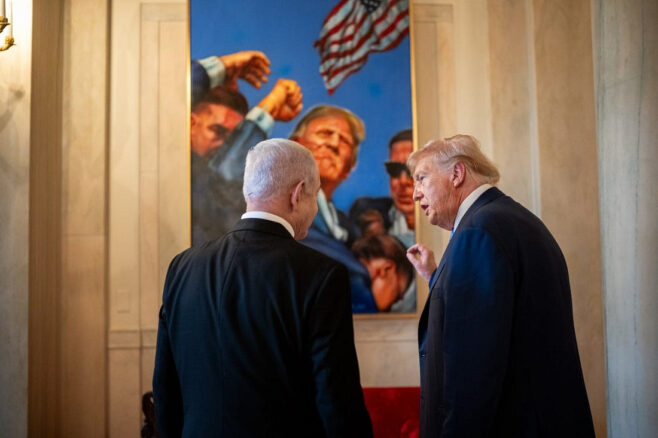
President Donald Trump's meeting with Israeli Prime Minister Benjamin Netanyahu will take place without cameras present, an uncommon approach for the president that signals the nature of the discussions to come.
Netanyahu's office had expressed concern about a repeat of what Trump termed "great television"-a public confrontation staged for media coverage. The absence of footage appears to be a relief rather than a disappointment.
This is not an adversarial encounter. Since Trump called Netanyahu "crazy" In early June, the relationship has stabilized, aided in part by Iranian actions that threatened to fracture the alliance and the Memorandum of Understanding between the two countries. Negotiations have borne out what Netanyahu had told Trump before the memorandum was finalized: he was skeptical of its prospects, but willing to support Trump's effort if pursued. That position was not universally backed within Netanyahu's Cabinet, yet later events have supported the approach.
While Netanyahu would not state it directly to the president, the underlying message is implicit: his earlier doubts about the course of action have proven justified.
The question now centers on what follows. A narrative may emerge of Trump resisting a return to military action while Netanyahu pushes for escalation - but that dynamic has already played out.
Five months ago, Netanyahu presented the case for military action in the White House Situation Room, complete with presentations outlining potential outcomes: leadership changes in Tehran, degraded missile capabilities, popular unrest, and a secular replacement for current leadership. Though that scenario did not materialize, Trump's alternative plan proved equally unsuccessful after Netanyahu's proposal was set aside.
The American priority remains Iran and the broader mission. Israel is expected to present two paths forward: either renewed military operations targeting Iran's energy infrastructure and uranium stockpiles with full force, or alternatively, maintaining current pressure through a blockade with no agreement and no war.
Netanyahu likely has preferences among these options, but either outcome appears workable to him.