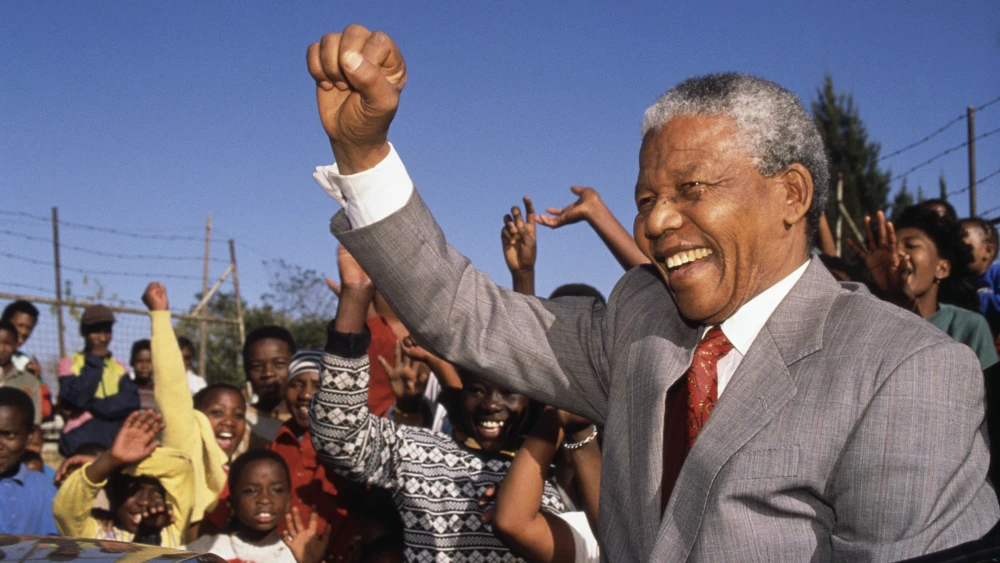
Every July 18, people worldwide commemorate Mandela Day by dedicating 67 minutes to community service - one minute for each year Nelson Mandela spent working toward freedom.
At the Nelson Mandela Foundation's inaugural Global Leadership Forum, New York City Mayor Zohran Mamdani delivered a keynote address that reframed Mandela as a champion of contemporary activist politics centered on Palestinian solidarity. The speech emphasized solidarity as both a value and strategy, positioning uncompromising support for those deemed oppressed as Mandela's defining lesson.
However, this portrayal diverges significantly from how Mandela was understood by South Africa's Jewish community and the broader world. Mandela achieved global prominence not through identifying victims and oppressors, but by persuading bitter enemies to construct a shared future. He believed justice required engagement with those he disagreed with, grounded in recognizing their humanity and locating sufficient common ground for peace.
When asked about his friendship with PLO chief Yasser Arafat during a 1990 Ted Koppel interview, Mandela refused to abandon Arafat but also did not dismiss Jewish community concerns. He stated, "If a Jewish leader has any doubts about our stand, I am prepared to address them and to allay their concern.... I'm prepared to iron out any differences that might exist. But they must know what our stand is: Arafat is a comrade-in-arms, and we treat him as such." Later that year, he met with American Jewish leaders in Geneva for over two hours, telling them, "If the test of my friendship with you is that I have to be an enemy of your enemy, then I cannot be your friend."
Mandela's actual stance on the Middle East was balanced. In 1993, he told South Africa's Jewish community, "We recognize the legitimacy of Zionism as a Jewish nationalism just as we recognize the legitimacy of Palestinian nationalism. We insist on the right of the State of Israel to exist within secure borders, but with equal vigor support the Palestinian right to national self-determination."
Mandela drew pragmatically from diverse sources, including right-wing figures. He credited Menachem Begin's The Revolt with shaping his military thinking, and Arthur Goldreich, a Palmach veteran, advised him on building Umkhonto we Sizwe. Despite his friendship with Arafat, Mandela maintained ties with Israel, met Israeli leaders and visited in 1999.
Mamdani's approach contrasts sharply. This year he became the first New York mayor in six decades to boycott the city's Israel Day Parade. He also publicly considered arresting Israeli Prime Minister Benjamin Netanyahu and released a video attacking both Israel and its premier.
Mandela practiced engagement politics; Mamdani practices confrontation. Mandela recognized South African Jews' contributions to the anti-apartheid struggle and democracy's construction. As chairman of the Jewish National Fund of South Africa, the writer notes that Mandela partnered with the organization to establish a park in Mamelodi, drawing on Israel's forestry expertise.
Mandela asked, "How do we build a future together?" Rather than "Which side are you on?"-a question largely absent from Mamdani's address. His legacy centered on bringing opposing sides together, not on choosing between them.