MEDICAL FIRST: Hadassah Hospital Performs Innovative Treatment For Patient With Recurrent Aggressive Brain Tumor
A 77-year-old patient with recurrent glioblastoma has undergone an experimental Alpha DaRT treatment at Hadassah Ein Kerem Medical Center, marking the first such procedure in Israel as part of a clinical trial. Glioblastoma, the most common malignant primary brain cancer in adults, typically recurs in the majority of patients despite surgery, radiation, and chemotherapy.
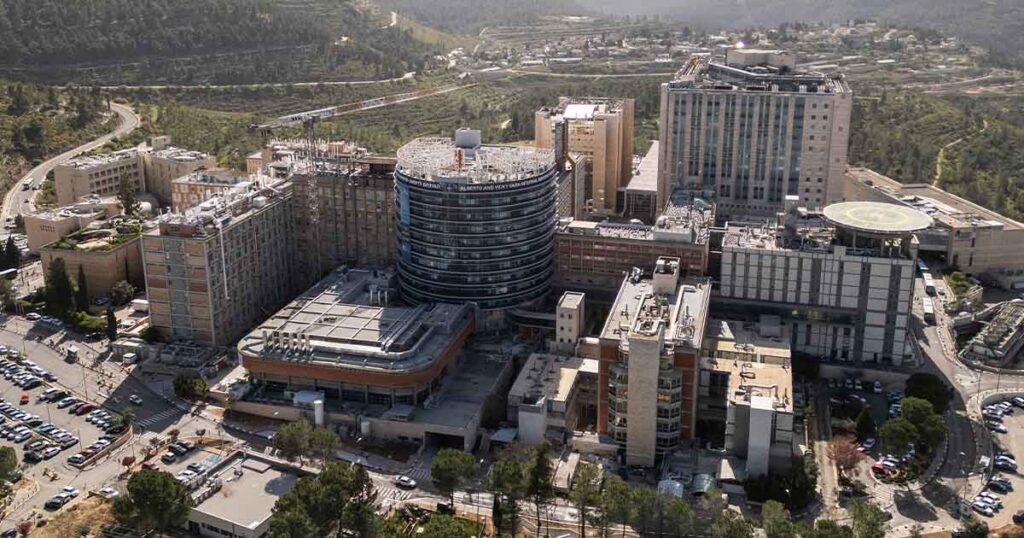
A 77-year-old patient with recurrent glioblastoma has undergone an experimental Alpha DaRT treatment at Hadassah Ein Kerem Medical Center, marking the first such procedure in Israel as part of a clinical trial. Glioblastoma, the most common malignant primary brain cancer in adults, typically recurs in the majority of patients despite surgery, radiation, and chemotherapy.
The procedure was conducted by Prof. Yigal Shoshan, director of the Neuro-Oncology and Stereotactic Radiosurgery Unit, alongside a multidisciplinary team. Alpha DaRT technology functions by inserting tiny sources that emit alpha particles directly into the tumor. Because these particles travel only very short distances, radiation can be concentrated on cancerous tissue while limiting exposure to surrounding healthy brain tissue.
Doctors first obtained a tissue sample to confirm active disease, then used the hospital's neurosurgical navigation systems to precisely insert the radiation sources into the tumor's center. The medical team noted that inserting the radiation sources through two different trajectories simultaneously represented a world first.
Researchers are also investigating whether the treatment can trigger an immune response against cancer cells elsewhere in the brain. Uzi Sofer, CEO of Alpha Tau, the Israeli company that developed the technology, called the procedure a significant milestone.
A separate U.S. Study called REGAIN is also evaluating the treatment. Interim findings showed complete local control in the treated area among three patients, with two displaying no remaining tumor signs on MRI scans. Researchers emphasized that findings remain preliminary and that the initial phase focuses on assessing the treatment's safety and feasibility. Hadassah is preparing to expand its clinical program to include patients with localized brain metastases.
Sources