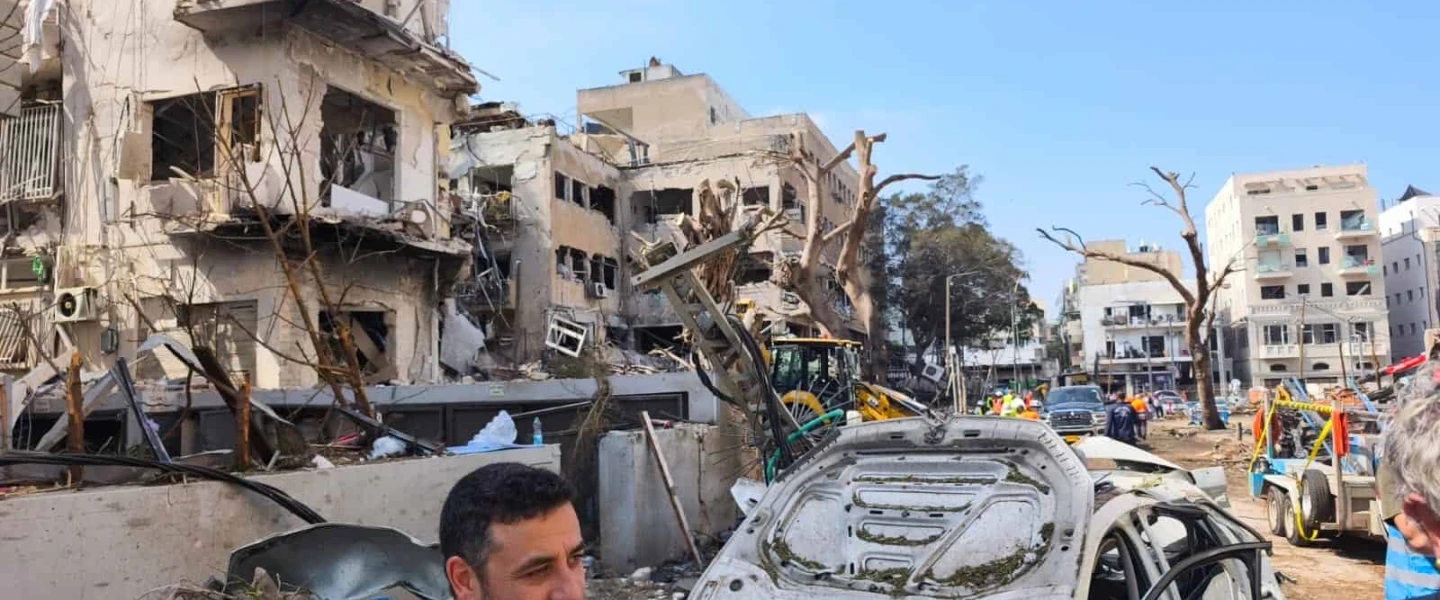
By lunchtime on Tel Aviv's Pinsker Street, the scene has largely returned to normal. Cafes are busy, diners sit beneath mature trees, and cyclists navigate through traffic as the neighborhood regains its familiar rhythm.
Yet midway down the block, recovery remains incomplete. Two damaged buildings stand behind fencing, their broken windows and scarred façades serving as a stark reminder that more than a year after an Iranian missile struck the area during Operation Rising Lion in June 2025, some wounds persist.
Though the missile caused only light injuries, dozens of residents have not returned to normal life. Some remain in temporary housing while reconstruction progresses slowly. Others continue to struggle with financial and emotional consequences of losing their homes.
One evacuated tenant described the emotional toll to Israeli news outlet Ynet: "It's like a war zone. I can't walk down that street. It's incredibly triggering. I go out of my way in the city just so I don't have to pass there." He noted being promised rental assistance until repairs were completed, only to have that support end despite the building remaining uninhabitable.
Another resident whose family still lives in temporary housing highlighted the dual burden of slow reconstruction and continued municipal property tax obligations on their destroyed home. "A missile fell on my house," She said. "I shouldn't have to pay municipal taxes on it." The Tel Aviv municipality responded that the issue is governed by national legislation and that it lacks authority to grant exemptions beyond what the law allows.
The buildings at 4 and 6 Pinsker Street hold historical significance. Constructed during the late 1920s and early 1930s in the International Style, the corner site once housed Cafe Noga, opened in 1941. According to Tel Aviv historian Dr. Ilan Shchori, the cafe became "one of Tel Aviv's legendary entertainment venues" And hosted British soldiers, artists, writers and musicians. "There is no doubt that Cafe Noga played a significant role in shaping the city's cultural life," Shchori told Ynet.
Restoring heritage structures presents unique challenges. Original architectural elements must be documented and preserved, while buildings must be strengthened to meet modern safety standards without erasing their historic character.
Tel Aviv's White City, encompassing more than 4,000 buildings, received UNESCO World Heritage Site designation in 2003 for its outstanding Modern Movement architecture. Following the Iranian missile attacks, UNESCO examined damage reports within the district and reminded parties of their obligations under international law to protect cultural heritage during armed conflict.
The municipality noted the Pinsker Street damage was severe because the buildings had never undergone structural reinforcement. Engineering assessments concluded parts could be restored rather than demolished, with planning applications now proceeding through approval processes, though progress also depends on property owner agreement.
For displaced families, planning procedures offer limited solace as many await return home, with some continuing to avoid the street entirely.