NEW HORMUZ REALITY: Gulf States Resign Themselves To Iranian Control Of Critical Waterway
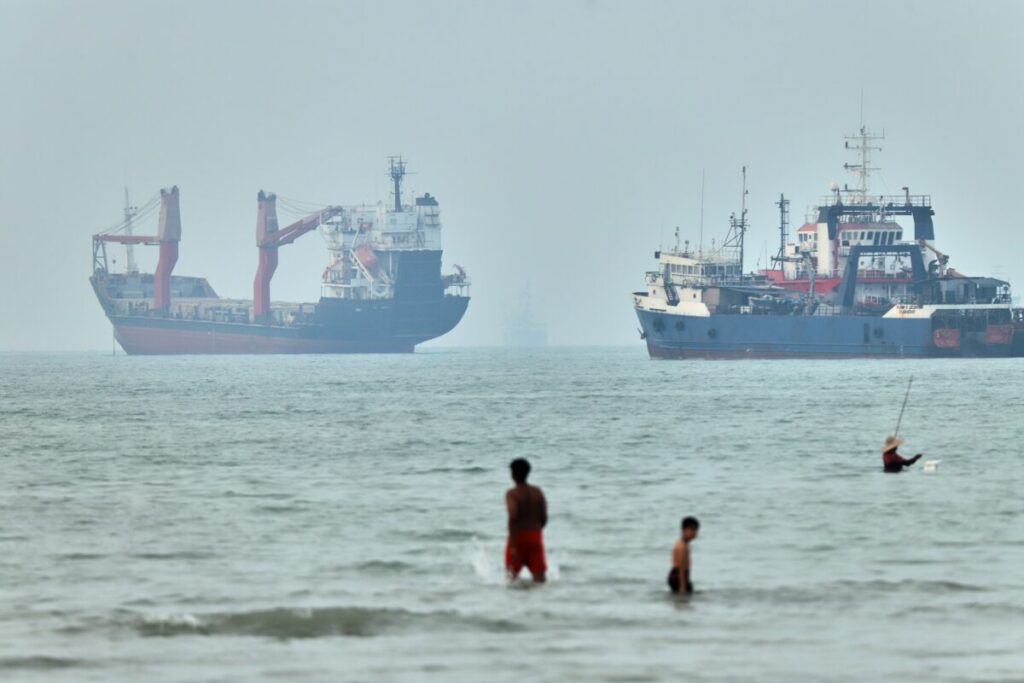
Persian Gulf energy producers increasingly view Iran's control over the Strait of Hormuz as a likely permanent development, with significant implications for their oil and gas exports and global energy supplies. Regional governments, despite strong opposition to formalizing Iranian oversight of vessels entering the Persian Gulf, see it as preferable to renewed military conflict between the United States and Iran.
Persian Gulf energy producers increasingly view Iran's control over the Strait of Hormuz as a likely permanent development, with significant implications for their oil and gas exports and global energy supplies. Regional governments, despite strong opposition to formalizing Iranian oversight of vessels entering the Persian Gulf, see it as preferable to renewed military conflict between the United States and Iran.
The situation presents a difficult choice for major energy-producing countries in the region. Gulf officials worry that further military escalation could expose their oil, gas, water and critical infrastructure to Iranian attacks. However, accepting proposed arrangements would grant Tehran unprecedented influence over a vital global shipping route.
Negotiations to reopen the strait have stalled recently. Iran has sought financial relief and restrictions on American and Israeli warships accessing the waterway, while the United States has rejected terms allowing Tehran to impose obstacles on international shipping. Gulf states increasingly believe they cannot guarantee the strait will remain fully open and safe and may need to accept some Iranian conditions.
Oil traffic through the strait has declined sharply. Crude exports fell to approximately 2.2 million barrels daily last week, down from roughly 8.5 million barrels daily a month prior, according to commodities-data provider Kpler. Gulf governments have also accepted that any agreement may leave Iran's missile program and support for regional militias unchanged.
Gulf countries are pursuing alternatives including pipeline expansion toward the Red Sea and Gulf of Oman, increased oil-storage capacity and routing ships through Hormuz near Oman with location beacons disabled. The United Arab Emirates had restored oil exports through combined overland routes and vessels using the strait, but Iranian attacks have increasingly threatened these gains. ADNOC reported that 16 of its ships have been struck since the conflict began, including four hit by missiles or drones in the past week.
Alternative routes have also proven vulnerable. Yemen's Iran-backed Houthis have attacked Saudi oil shipments transported across the Arabian Peninsula to the Red Sea, while a drone attack on an Egyptian Mediterranean port ignited two ships, including a U.S. Gas-storage tanker. These incidents have raised concerns that alternative routes cannot fully protect against Iran's capacity to disrupt regional energy trade.
Iranian officials have threatened to strike regional energy infrastructure if President Donald Trump escalates militarily. Tehran has warned of potential attacks on Gulf energy facilities, with regional officials acknowledging that both energy and water infrastructure remain highly vulnerable and could be targeted to disrupt supplies and pressure Washington.
For Gulf governments, the calculation has become stark: accepting greater Iranian influence over Hormuz is undesirable, but another major war risking further energy export disruption, infrastructure damage and foreign investment loss may prove worse.
Sources