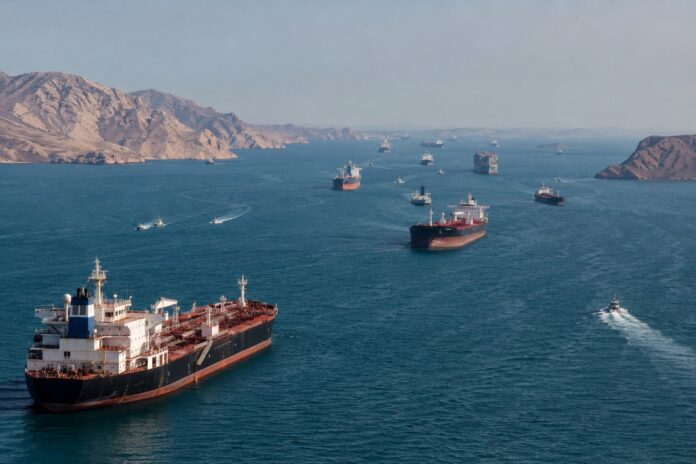
Fresh attacks on commercial vessels in the Middle East are complicating diplomatic efforts to secure an agreement with Iran ensuring safe passage through the Strait of Hormuz, though U.S. Officials report negotiations are advancing.
Early Tuesday, a commercial vessel near Oman was struck by an unidentified projectile, according to the United Kingdom Maritime Trade Operations. A second ship in the region also came under attack. The same day, Houthi rebels were blamed for sinking an Indian commercial vessel in the Red Sea, heightening concerns about vulnerability in critical shipping lanes despite ongoing talks.
India's Ministry of External Affairs responded to the incidents, stating, "The continued incidents of attacks on commercial shipping in the region are deeply worrisome."
Secretary of State Marco Rubio signaled continued progress despite the security deterioration. "There's oil moving right now through the straits. You know there are ships moving through the straits. There's oil moving right now through the straits. So the straits are open, nonetheless," He said. He described talks involving Oman and Iran on enabling safer short-term passage while longer-term discussions on denuclearization proceed. "And suffice it to say, there's been progress made in those talks, but not finality yet," Rubio added.
Treasury Secretary Scott Bessent suggested a breakthrough could come imminently. "We are in talks with the Iranians," Bessent said. "There is a chance we may have a deal today or tomorrow to open the strait and move towards a more normalized position in this conflict." His comments contributed to oil prices falling below $77 per barrel.
Reports indicate Iran has proposed a central role in regulating maritime traffic and charging vessels fees for passage. U.S. Officials rejected this, with one stating, "Any temporary routes will be without any impediments, meaning no approvals or permissions and no tolls or charges. The Strait of Hormuz is an international waterway and no party controls the lanes or the ability to transit through them."
President Donald Trump characterized the negotiations as Iran's "last chance for them to sign a good document" Before "decapitation," Referring to potential military strikes on Iranian leadership. He claimed to have canceled a military operation, saying he believed Tehran was willing to negotiate.
Iran disclosed a proposed navigation plan featuring two designated corridors through the strait, with northern entry near its coastline and southern exit near Oman.
The Strait of Hormuz carries roughly one-fifth of globally traded seaborne oil. Oman continues mediating between Washington and Tehran on securing safe passage before discussions turn to Iran's nuclear program.