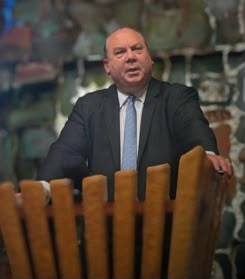
Rabbi Marc Schneier has transformed The Hampton Synagogue in Westhampton Beach from a congregation he founded in 1990 into a prominent gathering place for political and business leaders, according to a New York Post feature. The synagogue is described as the "ultimate political pit stop" In the Hamptons, where governors, presidential hopefuls, diplomats and corporate executives regularly engage with members of an affluent Jewish community.
Over more than three decades, Schneier has developed the synagogue beyond a place of worship into a venue where public officials from across the political spectrum meet directly with congregants to discuss issues affecting the Jewish community, Israel, antisemitism and national policy. The synagogue's events are characterized by candid question-and-answer sessions rather than scripted political appearances.
Recent visits have drawn national attention. New York Gov. Kathy Hochul attended a Shabbat dinner following a violent antisemitic attack in New York City, and Maryland Gov. Wes Moore addressed congregants during services the next morning and participated in an unscripted discussion on Israel, antisemitism and Middle East policy.
The Post reported that politicians from both parties have appeared at the synagogue over the years, including former President Bill Clinton, former Secretary of State Hillary Clinton, former New York City Mayor Michael Bloomberg, Secretary of State Marco Rubio, former New York Gov. Andrew Cuomo and New York City Mayor Eric Adams.
The congregation's membership includes influential business and philanthropic figures such as Apollo Global Management CEO Marc Rowan, New England Patriots owner Robert Kraft, U.S. Special Envoy Steve Witkoff, developer Alex Witkoff, jewelry designer Lorraine Schwartz and public relations executive Ken Sunshine.
Beyond politics, Schneier founded the Foundation for Ethnic Understanding and has been recognized for promoting Jewish-Muslim dialogue and interfaith cooperation. Schneier told the Post that the congregation seeks to expose members to a broad range of viewpoints and provide direct access to decision-makers, rather than endorsing political candidates.
The synagogue now has approximately 500 member families and draws more than 1,000 worshippers during peak summer weekends. Its summer programming includes interviews, public forums and discussions with leaders from government, business, academia and the nonprofit sector.