Opinion: Something Moved Beneath Schumer's Feet
NEW YORK, Senate Democratic Leader Chuck Schumer has long told Jewish audiences that his surname derives from shomer, meaning "guardian," And he has identified himself as Shomer Yisrael, a guardian of Israel and the Jewish people. That identity became central to his political brand.
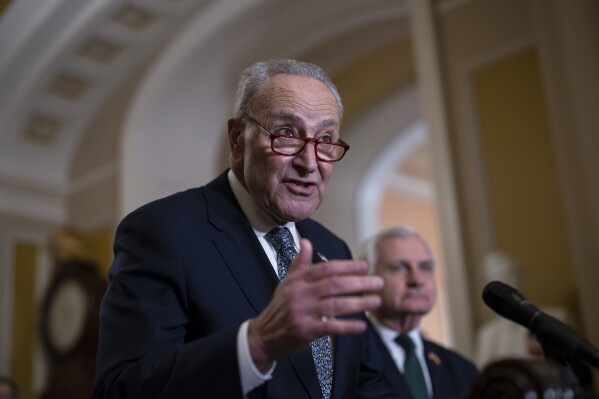
NEW YORK, Senate Democratic Leader Chuck Schumer has long told Jewish audiences that his surname derives from shomer, meaning "guardian," And he has identified himself as Shomer Yisrael, a guardian of Israel and the Jewish people. That identity became central to his political brand.
His recent endorsement of Dr. Abdul El-Sayed, the Democratic nominee for U.S. Senate from Michigan, therefore warrants examination beyond typical partisan debate.
Schumer initially backed Rep. Haley Stevens, a mainstream pro-Israel Democrat, in the Michigan primary. El-Sayed defeated her in a close race. With Michigan crucial to Democratic hopes of regaining Senate control, Schumer and other party leaders quickly unified behind El-Sayed. When asked about the shift, Schumer said: "The issue isn't me. It's about winning."
There is a case for his position. As Senate Democratic leader, his job is electing Democratic senators, and refusing to support El-Sayed could help elect a Republican. Party leaders routinely support primary losers once the nomination is decided.
However, El-Sayed's record extends beyond typical disagreements. He has called for ending U.S. Military aid to Israel, employed language of apartheid and genocide against the Jewish state, and questioned the motives of Israel-supporting Democrats.
The underlying question is what Schumer's willingness to support someone with such positions suggests about shifting political terrain. For decades, American Jews could assume support for Israel's existence as a Jewish state enjoyed bipartisan backing. That consensus is eroding.
The source notes that Israel's opponents have organized systematically while much of the organized Jewish community treated Democratic support for Israel as permanent rather than requiring constant cultivation. Jewish organizations often emphasized access to Democratic leaders while hesitating to confront ideological trends within the party. Meanwhile, activists have worked to reframe Zionism as morally suspect rather than as the national liberation movement of the Jewish people.
No senator can serve as guardian for the Jewish people alone. Political coalitions, generations and incentives all shift. If even Schumer finds the position untenable, American Jews should focus less on what happened to him and more on what changed in the political landscape itself.
Sources