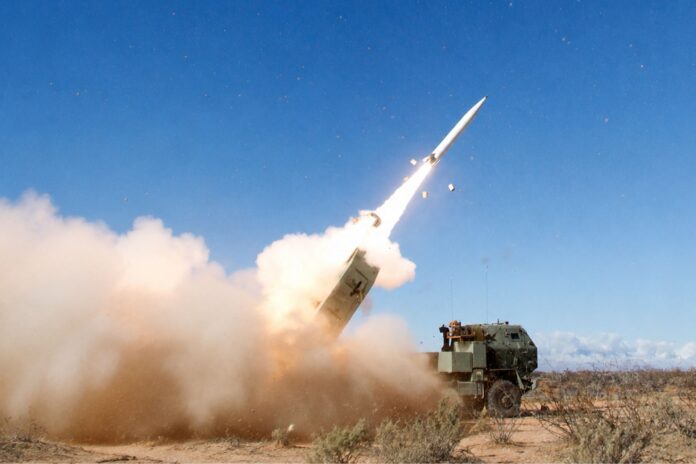
The U.S. Military has reportedly consumed nearly its entire inventory of long-range precision surface-to-surface missiles during a five-month conflict with Iran, according to three people with access to internal military data. The depletion has raised concerns within the Trump administration about the nation's capacity to respond to potential military crises involving China or Russia.
The Army has used "virtually all" Of its stockpile of Army Tactical Missile Systems (ATACMS) and Precision Strike Missiles (PrSM), both among the service's most critical long-range precision munitions. Each weapon costs more than $1 million and enables forces to strike distant targets with high accuracy while remaining outside enemy defensive range. ATACMS has been widely deployed by Ukraine against Russian targets, while PrSM, the newer system, is gradually replacing it due to greater range and advanced capabilities.
The significant reduction could constrain President Donald Trump's long-range strike options in any future major offensive against Iran, potentially forcing greater reliance on manned aircraft and bombing missions that carry higher risks for pilots. Sources declined to specify exact remaining inventory levels.
Trump launched the military campaign alongside Israel in February, initially expecting brief operations. As fighting extended into its fifth month, officials expressed growing concern that shrinking missile supplies could undermine American deterrence against other global competitors.
A fourth source said U.S. Central Command had nearly exhausted its land-based missile inventory from the conflict's start but replenished supplies by drawing from stockpiles elsewhere globally. All four sources spoke anonymously due to lack of authorization to discuss classified information.
Responding to reported stockpile concerns, Trump stated the United States possesses "far more munitions than anyone in the world" And "far more than we need." He added that defense companies are "making more munitions than they have ever made before, in addition to expanding their plants and equipment at record levels."
Defense analysts acknowledge U.S. Production of artillery shells and several missile classes has reached record levels, though many warn manufacturing may remain insufficient for prolonged high-intensity conflict. Lockheed Martin and Raytheon declined comment on inventory levels.
Pentagon spokesman Sean Parnell rejected suggestions the military's readiness has been compromised, stating "America's military is the most powerful in the world and has everything it needs to execute at the time and place of the President's choosing."
Internal inventory figures have circulated through the federal government, prompting Trump administration discussions about operational sustainability. One source attributed heavy ATACMS and PrSM use to deliberate strategy reducing risks from manned aircraft in defended Iranian airspace.
Military experts note these weapons would prove critical in potential conflicts with adversaries possessing sophisticated air defenses like China. PrSM inventories were relatively limited before the war because the system was still entering service, though the Army has ordered additional missiles for delivery beginning in 2027, with ATACMS production being phased out.
Senior military officials warned Trump that defensive weapons stocks, including Patriot missile interceptors, have also fallen significantly. A U.S. Official disputed suggestions Trump halted another major Iran attack due to stockpile concerns, stating instead that Gulf nation pressure influenced the decision.
The Center for Strategic and International Studies estimated approximately 65% of America's Patriot interceptor inventory was used between February and July, while THAAD interceptor stockpiles declined at least 38% since conflict began. One source said the United States expended just under half its worldwide Tomahawk cruise missile inventory since the war's start.
As the Pentagon rebuilds inventories, Raytheon reached a tentative multi-year agreement with the Defense Department to significantly increase Tomahawk production and several other critical munitions.