Saudi Road Through Empty Quarter Emerges as Strategic Gulf Bypass
A 564-kilometer highway traversing the world's largest sand desert has emerged as a vital trade alternative for Gulf states seeking to reduce dependence on the Strait of Hormuz amid regional security concerns.
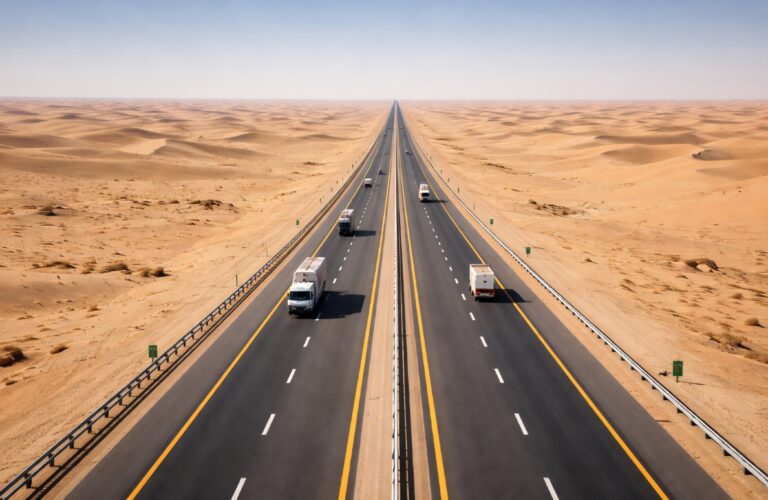
A 564-kilometer highway traversing the world's largest sand desert has emerged as a vital trade alternative for Gulf states seeking to reduce dependence on the Strait of Hormuz amid regional security concerns.
The road connects the Batha Haradh intersection in Saudi Arabia to the Omani border crossing. Construction required approximately $533 million and involved more than 3.3 million worker hours, 750 specialized machines, and the removal of 150 million cubic meters of sand as dunes continuously shifted during the project. The highway opened in late 2021 designed to increase trade and pilgrimage traffic, cutting travel time from 18 hours through the United Arab Emirates to roughly six hours.
Regional tensions have heightened the route's strategic importance. In March, Dubai Customs and Oman established a bonded corridor for goods routed through Omani ports, resulting in customs declarations rising from approximately 12,000 that month to nearly 100,000 in April. Sharjah entered into a similar agreement in May.
U.S. Treasury Secretary Scott Bessent has stated the strait itself "would become just another body of water within two years." The highway represents a significant investment in reducing regional reliance on that waterway.
Sources