Something moved beneath Schumer's feet
When Schumer spoke to Jewish audiences, he explained that his name derived from shomer, meaning "guardian," And he adopted the role of Shomer Yisrael - a guardian of Israel and the Jewish people. The identity became central to his political brand as the highest-ranking Jewish elected official in American history.
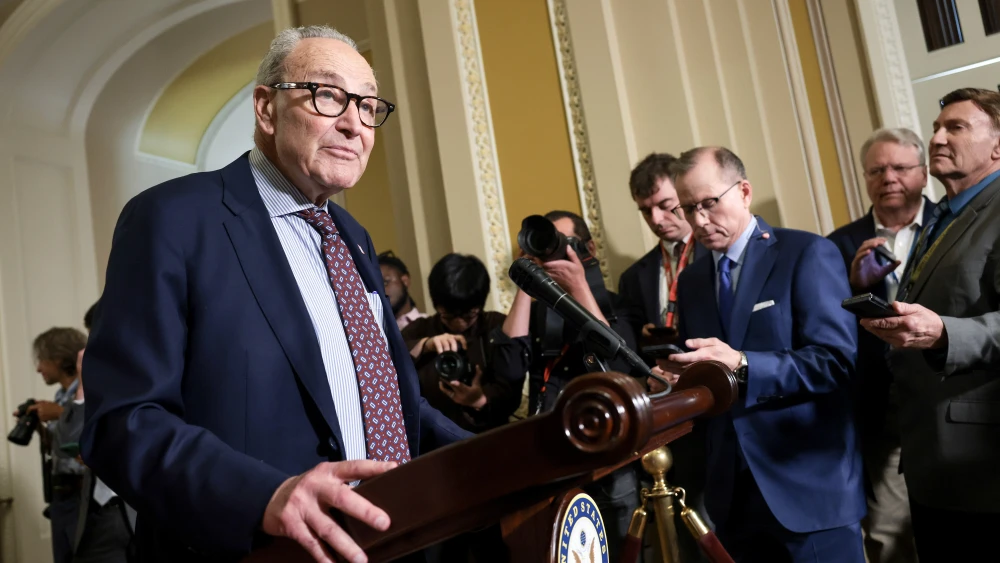
When Schumer spoke to Jewish audiences, he explained that his name derived from shomer, meaning "guardian," And he adopted the role of Shomer Yisrael - a guardian of Israel and the Jewish people. The identity became central to his political brand as the highest-ranking Jewish elected official in American history.
That context makes his endorsement of Dr. Abdul El-Sayed, the Democratic nominee for U.S. Senate from Michigan, significant beyond typical partisan debate.
Schumer had initially backed Rep. Haley Stevens, a mainstream pro-Israel Democrat, in the primary. El-Sayed won the race narrowly. With Michigan crucial to Democratic efforts to control the Senate, Schumer and other party leaders quickly united behind El-Sayed. When questioned about the reversal, Schumer stated: "The issue isn't me. It's about winning."
The political logic is straightforward. As Senate Democratic leader, Schumer's job is electing Democratic senators. Party leaders routinely support primary opponents once they become nominees. Refusing to back El-Sayed could help elect a Republican and derail Democratic Senate hopes.
Yet Shomer Yisrael carried implications beyond electoral strategy.
El-Sayed's record includes calls for ending U.S. Military aid to Israel, use of apartheid and genocide language regarding the Jewish state, and questions about the motives of Israel-supporting Democrats. The concern is not his Muslim faith or support for Palestinian rights, which Jews themselves debate vigorously regarding Israeli government policies.
The meaningful question is what Schumer's decision signals about fundamental disagreements no longer being grounds for political opposition.
Similar patterns have emerged locally. New York City Mayor Zohran Mamdani has advanced without aggressive anti-Zionism being an impediment. Rep. Alexandria Ocasio-Cortez and other progressive Democrats have demonstrated that positions once considered far outside the mainstream now command substantial party constituencies.
For decades, American Jews assumed Israel's existence as a Jewish state held bipartisan consensus. That foundation is fracturing.
The organized Jewish community may have contributed to this shift. For years, many treated Democratic support for Israel as permanent rather than a position requiring ongoing explanation and defense. Jewish organizations prioritized access to Democratic leaders while sometimes avoiding confrontation with ideological trends within the party. Many Jewish voters treated pro-Israel sentiment as inherent to mainstream Democratic politics - but it never was.
Israel's opponents, meanwhile, organized deliberately, recruited candidates, contested primaries, and taught activists to view Zionism as morally suspect rather than the Jewish people's national liberation movement.
Schumer's situation illustrates why relying on individual political "guardians" Was always precarious. No senator can serve as Shomer Yisrael. No political party can permanently hold that role. Coalitions, generations, and incentives shift. Yesterday's firm principle becomes today's uncomfortable compromise and tomorrow's party doctrine.
Schumer may know precisely where his moral compass points. He may simply have concluded that following it now carries a political cost he is unwilling - or, in his leadership role, believes unable - to pay. A guardian's value lies not in protecting when the task is easy, but when abandoning the post would be simpler.
American Jews should focus less on what happened to Chuck Schumer and more on what has transformed the political landscape surrounding them and how they intend to respond.
Sources