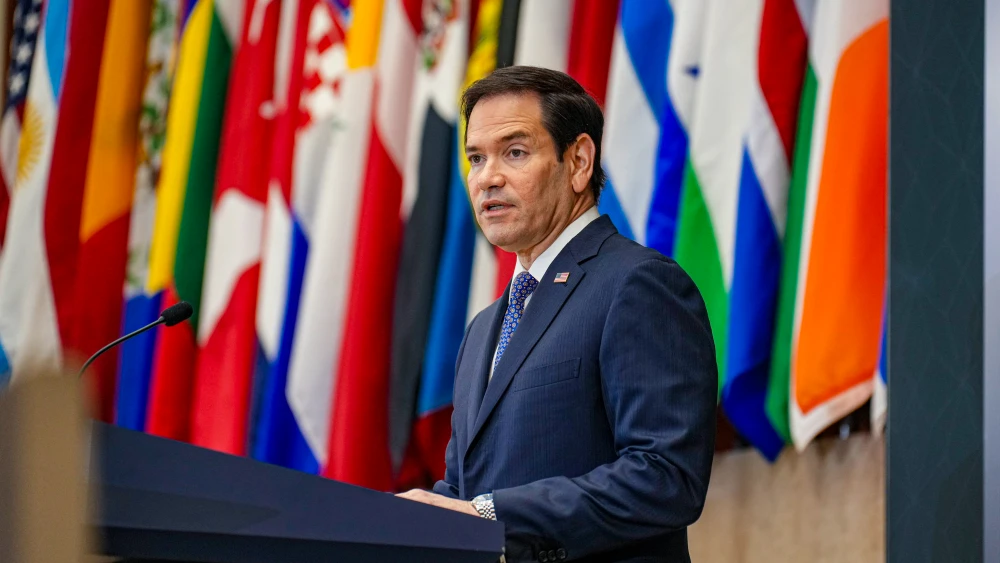
The U.S. State Department hosted a ministerial conference on July 16 bringing together representatives from roughly 70 countries, including Israel, to address what it characterized as a gap in international counterterrorism efforts. The gathering focused on political terrorism, particularly transnational far-left violence, which the department argues has received insufficient international attention and resources.
State Department spokesman Tommy Pigott described observing "a convergence of different types of terrorism, an overlap with increasing connections, for example, with Iranian terror proxies and these far-left terror groups," Adding that officials are "seeing increasing links, perhaps increasing motivations, when it comes to terror plots."
The department maintained that increased focus on far-left extremism does not diminish its commitment to countering Iran-backed Islamist terrorism. Pigott noted that existing counterterrorism tools, including sanctions and international cooperation targeting Tehran, have successfully thwarted attacks in many instances. Iran backs terrorist organizations including Hamas and Palestinian Islamic Jihad in Gaza, Hezbollah in Lebanon, the Houthis in Yemen, and Shiite militias in Iraq.
The administration is pursuing a trilateral framework involving the United States, Israel, and the Lebanese government to address Hezbollah's presence in southern Lebanon. The arrangement led to a recent White House visit by Lebanese President Joseph Aoun and the launch of a pilot zone program designed to enable Lebanese Armed Forces to establish control over areas long held by Hezbollah, with later Israeli military withdrawal.
Pigott stated the U.S. Has been "focused on creating the space for good faith conversations" And emphasized the importance of helping countries "build up the infrastructure institutions that are needed to make sure they're sovereign over their territories."
A State Department report released this month examined Cuban influence on hard-left American organizations, naming the Democratic Socialists of America and Code Pink. Pigott expressed "grave concerns with the network, the decades-long influence and espionage campaign that the Cuban regime has implemented and is continuing to implement to this day within the United States of America," Characterizing the report as evidence presented for public review.