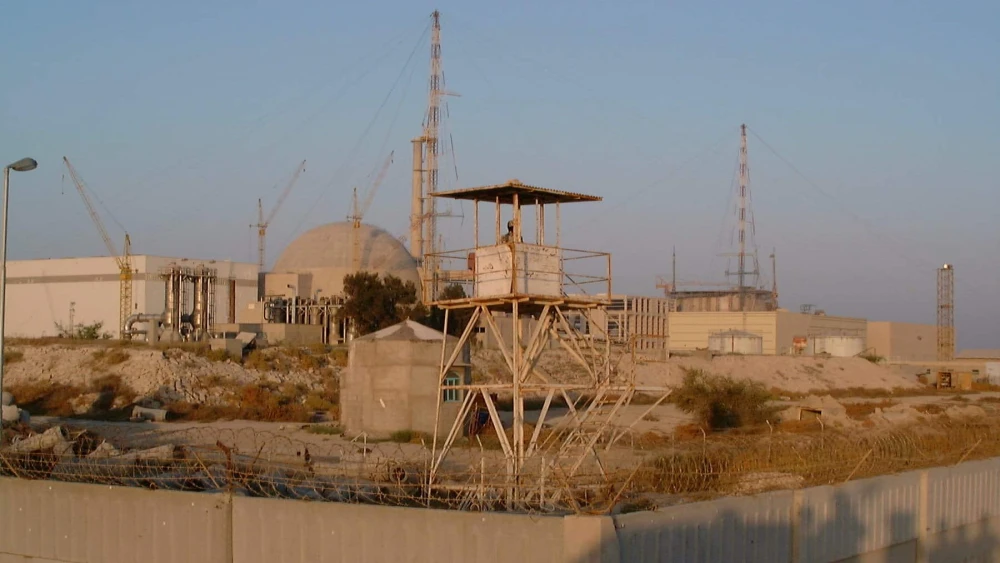
Iran's nuclear program has suffered severe damage from successive military strikes by Israel and the United States, yet intelligence assessments indicate Tehran remains committed to secretly rebuilding its nuclear capabilities over time.
Recent reports citing Israeli intelligence shared with U.S. Officials indicate Iranian authorities have transferred thousands of uranium-enrichment centrifuges into buried tunnels at the Kuh-e Kolang Gaz La facility, located near the Natanz nuclear complex that was struck in 2025 conflict. Some reports also claimed Iran moved uranium stockpiles to the underground site.
The developments have heightened tensions in the Persian Gulf region, prompting U.S. President Donald Trump to warn that American military forces are prepared to strike the fortified site.
Brig. Gen. (res.) Yossi Kuperwasser, head of the Jerusalem Institute for Security and Strategy and former head of Israel's Military Intelligence Research and Assessment Division, said the cumulative strikes have severely degraded Iran's nuclear infrastructure. "What we need to understand is that the Iranian nuclear program was hit very hard in both operations, mainly in 'Rising Lion' and then once again in 'Roaring Lion'," Kuperwasser told JNS.
The damage extended beyond primary enrichment sites to support networks for weaponization and missile production. Kuperwasser detailed strikes affecting uranium enrichment, centrifuges, weapons research facilities at Parchin, and the uranium conversion facility at Isfahan, which he said was "essentially destroyed." Ballistic missile production capabilities were also significantly damaged.
Despite the devastation, activity identified at the underground Pickaxe Mountain facility - under construction and designed to provide subterranean protection against aerial bombardment - show Iran's continued commitment to rehabilitating its program, Kuperwasser cautioned. However, reconstituting nuclear weapons capability would take considerable time given damage to weaponization facilities.
Jonathan Ruhe, a fellow at the Jewish Institute for National Security of America, emphasized that Western planners should evaluate Iran's actions against decades of deceptive practices. "American and Israeli planners should assume Iran intends to reconstitute key activities clandestinely, including centrifuge manufacturing and storage, as well as uranium conversion, enrichment, stockpiling and metallurgy," Ruhe argued. International Atomic Energy Agency director Rafael Grossi has stated inspectors "cannot fully account for Iran's uranium stockpiles, centrifuges, and related capabilities."
Ruhe assessed that while Iran's program has been significantly set back, "the program has not been 'obliterated,'" And the key question remains "How quickly?" Iran can rebuild and whether detection is possible in time.
The Institute for Science and International Security published satellite imagery reports documenting damage at multiple facilities and identifying repair activities underway at some sites, including the Taleghan-2 weapons research facility. The institute concluded that nine to 12 nuclear weapons development sites were targeted across both conflicts, further settin back Iran's nuclear weapons capability.