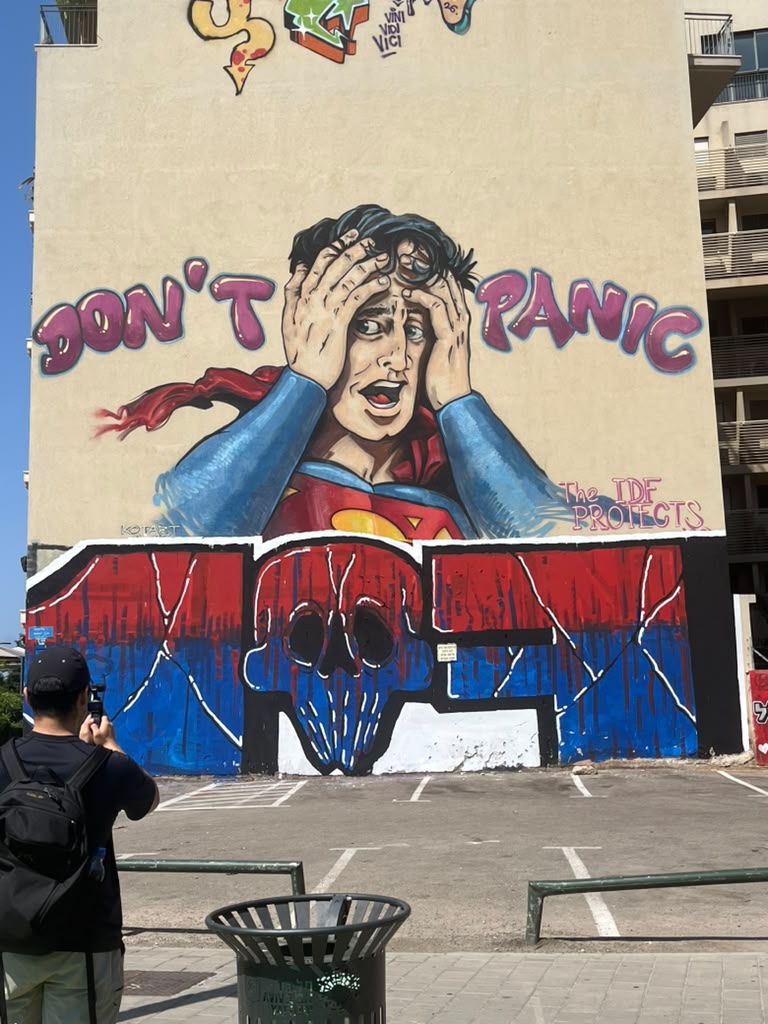
A walk through Tel Aviv's Florentine neighborhood reveals walls covered in graffiti that reflects the impact of October 7 on Israeli society. Much of the street art addresses the Hamas attack and its aftermath.
One prominent piece depicts Superman with the text "Don't panic - the IDF will protect you," Created by street artists Roman and Andrei from Ashkelon weeks after Roman's house was struck by shrapnel following the October 7, 2023 attack.
According to Avi Ettinger, who guided journalists through the neighborhood, the distinction between graffiti and street art hinges on legality: "To be called graffiti, it must be in public and without the consent of the authorities. Otherwise, it's called street art." Artists risk fines and jail time if caught, yet the city has largely permitted work to remain, particularly pieces related to October 7.
One notable artwork depicts Rachel Edri from Ofakim, who survived over 17 hours after five armed Hamas terrorists entered her home. She engaged her attackers in conversation, offered them refreshments, and bandaged a wounded gunman. She repeatedly asked permission to use the bathroom, each time passing an open window where she could exchange signals with security forces outside. A special forces unit eventually stormed the residence and rescued her and her late husband, David.
She later said that "a hungry man is dangerous" And served her attackers coffee, tea, soft drinks and even homemade Moroccan cookies, the recipe for which quickly went viral.
In the graffiti, Edri appears as Rosie the Riveter, the World War II symbol of American women in the workforce. At a time when many Israelis felt powerless, Edri came to symbolize Israeli resilience.
Ettinger described graffiti as an expensive hobby, with large pieces requiring 20-30 paint cans at a cost exceeding 800 shekels. He noted that Tel Aviv has an informal community of graffiti artists, some with professional careers, who often work at night. When an artist dies, there is an informal agreement not to paint over their work.
Another piece by military graffiti artists Rotem Zamir and Yuval Peler depicts an IDF soldier and a young girl in a pink sweatshirt. Overall, the graffiti serves as a mirror of Israeli society, reflecting a country traumatized by October 7 while remaining resilient.