The power to paralyze a country by sea: Israel Navy unveils new vision
About 98% of goods entering Israel arrive by sea, making maritime trade a vital economic, industrial and strategic asset. For the Israel Navy, the waters surrounding the country represent both a critical domain and an operational theater.
About 98% of goods entering Israel arrive by sea, making maritime trade a vital economic, industrial and strategic asset. For the Israel Navy, the waters surrounding the country represent both a critical domain and an operational theater.
Ynet observed the Navy's largest branch-wide exercise since October 7, a three-day maneuver involving more than 1,000 sailors at sea and hundreds more in command centers and coastal positions. The operation, led by the missile-boat flotilla Shayetet 3 alongside the submarine flotilla Shayetet 7, naval commandos and patrol squadrons, practiced scenarios ranging from defense of gas rigs to long-range strikes.
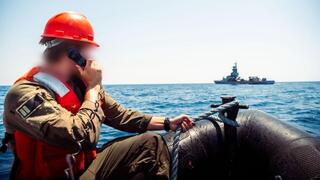
Aboard a Dvora-class patrol boat, sailors operate in isolated conditions, spending alternating weeks at sea and ashore. Mobile phones are collected before departure. The crew develops its own culture built on shared routines and traditions, including a Saturday night pasta meal. This isolation sharpens their vigilance for potential infiltration attempts or aerial threats.
The exercise demonstrated the capabilities of larger vessels like the INS Atzmaut, a Sa'ar 6-class missile corvette. The ship can intercept missiles, strike targets hundreds of kilometers away and conduct prolonged surveillance operations. In 2024, the INS Atzmaut logged over 4,100 sea hours, compared with a typical annual average of 1,500 hours.
Recent global events have elevated the strategic importance of maritime control. Confrontations between the United States and Iran at the Strait of Hormuz and threats in the Bab el-Mandeb Strait demonstrated that dominance over shipping lanes and chokepoints can paralyze countries and inflict severe economic damage.
Israel Navy chief Vice Admiral Eyal Harel, who assumed office in April, is pursuing an ambitious strategy to transform the Navy into a "regional power." The plan calls for expanding the missile-boat fleet from 15 vessels to as many as 21, acquiring multirole Reshef-class vessels and deepening international partnerships with navies including Greece, Ethiopia and Somaliland.
The Navy has recently contended with protest flotillas attempting to reach Gaza. According to a senior security official, operations target flotillas five or six days before arrival. "The forces arrive with a security envelope capable of isolating the flotilla boats," The official said, describing naval commandos raiding vessels in darkness, arresting activists and moving between boats. The official compared the operation to "a game of snooker," Noting that once the first boat is captured, others scatter, allowing rapid dismantling of multiple vessels in a single night.
Navy personnel are notably dedicated, often preferring reading and studying technical systems to social media engagement. Some still use MP3 players. Each missile boat is divided into sealed sections to prevent catastrophic damage. The personnel maintain the highest standards, forming one of Israel's most important defensive barriers.
However, in an all-out conflict with simultaneous attacks on shipping and supply routes across distant areas, the Navy would face extraordinary volume of incoming fire.
Today's Navy recognizes the scale of current challenges and seeks continuous improvement. The transition from an excellent tactical fleet to a true Mediterranean maritime power remains a long path, requiring substantial investment that the commander hopes will be approved.
Sources