The power to paralyze a country by sea: Israel Navy unveils new vision
About 98% of goods entering Israel arrive by sea, making maritime trade a critical economic and strategic lifeline. For the Israel Navy, this maritime domain is far more than a shipping route - it is a contested space where strategic interests are defended.
About 98% of goods entering Israel arrive by sea, making maritime trade a critical economic and strategic lifeline. For the Israel Navy, this maritime domain is far more than a shipping route - it is a contested space where strategic interests are defended.
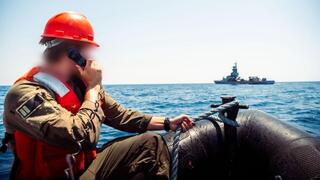
Ynet observed the Navy's largest branch-wide exercise since October 7, a three-day operation involving more than 1,000 sailors at sea and hundreds more in command centers. The maneuver included the missile-boat flotilla Shayetet 3, submarine flotilla Shayetet 7, naval commandos from Shayetet 13 and routine-security squadrons, practicing defense of strategic assets including gas rigs and long-range strike capabilities.
The Dvora-class patrol boat serves as the foundation of naval operations. Sailors spend alternating weeks at sea and ashore, developing their own shipboard culture sustained by camaraderie and ritual - including a Saturday night tradition of serving only pasta. Isolation at sea sharpens vigilance; the ordinary rhythm of shipboard life can shift instantly into confrontation.
The larger Sa'ar 6-class missile corvette INS Atzmaut represents a technological escalation. The ship operates sophisticated systems capable of intercepting missiles, striking targets hundreds of kilometers inland and conducting prolonged surveillance operations. During 2024, the INS Atzmaut logged over 4,100 sea hours - far exceeding the typical annual average of 1,500 hours - to maintain readiness while reducing port exposure.
Recent geopolitical events have elevated maritime strategy's importance. Confrontations around the Strait of Hormuz and threats in the Bab el-Mandeb Strait demonstrated that control of shipping lanes and chokepoints can paralyze countries and inflict severe economic damage.
Israel Navy chief Vice Adm. Eyal Harel, who assumed command in April, is pursuing an ambitious goal: transforming the Navy into a regional power. The strategic plan calls for expanding the missile-boat fleet from 15 to eventually 21 vessels, acquiring multirole Reshef-class ships and deepening international cooperation with navies including Greece and emerging African partnerships.
The Navy has also addressed protest flotillas attempting to reach Gaza through operations designed to neutralize threats five or six days before they reach Israeli shores. A senior security official described the approach as "like a game of snooker," Involving naval commando raids conducted at night to isolate and arrest activists across multiple vessels.
Navy personnel remain distinctive within the Israeli military. Isolated for extended periods, they operate with exceptional focus and discipline, forming a critical defensive layer. Yet the Navy faces constraints: in a large-scale conflict with coordinated attacks on shipping and supply routes across distant arenas, the fleet would face extraordinary demand.
The path from an excellent tactical fleet to a genuine Mediterranean maritime power remains substantial, requiring significant investment in force expansion.
Sources