The power to paralyze a country by sea: Israel Navy unveils new vision
About 98% of Israel's imports arrive by sea, making maritime trade a critical economic and strategic lifeline. For the Israel Navy, this shipping corridor represents both operational responsibility and a potential battlefield.
About 98% of Israel's imports arrive by sea, making maritime trade a critical economic and strategic lifeline. For the Israel Navy, this shipping corridor represents both operational responsibility and a potential battlefield.
Ynet observed the Navy's largest branch-wide exercise since October 7, a three-day operation involving more than 1,000 sailors at sea alongside hundreds more in command centers. The maneuver, led by missile-boat flotilla Shayetet 3 and submarine flotilla Shayetet 7, included the Shayetet 13 naval commandos and routine-security squadrons. Exercises covered defense of strategic assets including the Tamar, Leviathan and Karish gas rigs, as well as long-range strike capabilities.
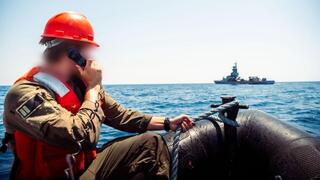
Crew life aboard Dvora-class patrol boats involves weekly rotations of seven days at sea and seven days ashore. Mobile phones are collected before departure. Sailors develop their own culture centered on shared routines, including a strict Saturday tradition of cooking only pasta. The isolation sharpens vigilance; quiet moments can shift instantly to infiltration attempts or aerial threats.
The Sa'ar 6-class missile corvette INS Atzmaut represents a technological escalation. A normal missile boat logs approximately 1,500 sea hours annually. The INS Atzmaut exceeded 4,100 hours in 2024 due to sustained wartime operations, with over 1,500 hours already logged by August 2026. These vessels can intercept missiles, strike targets hundreds of kilometers inland and conduct extended surveillance operations.
Recent global events - including U.S.-Iran confrontations at the Strait of Hormuz and threats in the Bab el-Mandeb Strait - have demonstrated that maritime chokepoints can paralyze countries and inflict severe economic damage. Israel Navy chief Vice Admiral Eyal Harel, appointed in April, is pursuing expansion of the missile-boat fleet from 15 vessels to eventually 21, alongside acquisition of Reshef-class vessels and deepened international cooperation including partnerships with Greece and African nations.
The Navy has intercepted protest flotillas attempting to reach Gaza by neutralizing threats five or six days before they reach Israeli shores. A senior security official described the operation as isolating flotilla boats with a security envelope, with naval commandos raiding vessels and moving between them systematically.
Navy personnel are notably distinct within the military structure, forming closely bonded crews who maintain operational readiness during extended periods isolated from the outside world. However, sustained simultaneous attacks across multiple distant arenas would present extraordinary operational challenges.
After the exercise concluded, crews returned to shore for maintenance and brief respite before resuming operations. While the Navy has demonstrated tactical excellence and flexibility, the transition to a true regional maritime power requires sustained investment and expanded capabilities.
Sources