The threat Israel is too tired to see
The 36th NATO summit convened in Ankara on July 7-8, marking Turkey's first time hosting the alliance on its own soil in 22 years. The gathering brought together 32 leaders, tens of billions in new defense contracts, and Ukrainian President Volodymyr Zelenskyy as a guest, with Turkish President Recep Tayyip Erdoğan presiding.
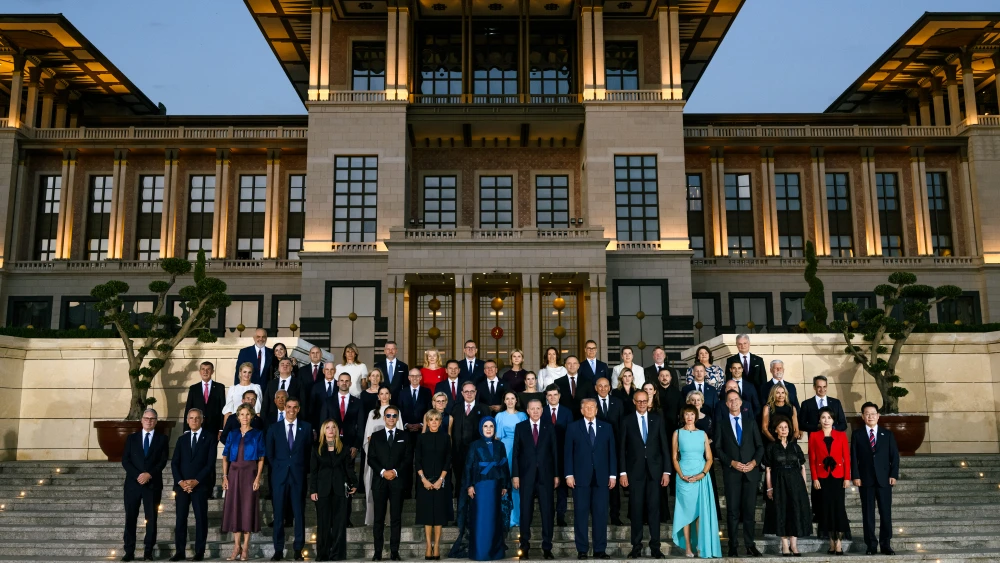
The 36th NATO summit convened in Ankara on July 7-8, marking Turkey's first time hosting the alliance on its own soil in 22 years. The gathering brought together 32 leaders, tens of billions in new defense contracts, and Ukrainian President Volodymyr Zelenskyy as a guest, with Turkish President Recep Tayyip Erdoğan presiding. For a state known for harsh anti-Israel rhetoric in the region, the moment represented a significant boost in international standing.
Israel's response was notably muted. After three years of conflict, the country faces widespread exhaustion, with public focus directed toward Gaza's unresolved situation, economic pressures and internal divisions. Turkey has receded from immediate attention, exposing a critical gap: Israeli society recognizes the Turkish threat but lacks the capacity to address it.
Two Dor Moriah Center surveys conducted in May and June substantiate this tension. A mass survey of 1,007 respondents revealed clear threat perception: 34.4% identified Turkey as "a serious strategic threat," While 28.5% called it "an unfriendly country." Only 4.9% saw Turkey as a friend or potential partner. Turkish activities in eastern Jerusalem faced near-unanimous rejection, with 69.9% of Jewish respondents rating Ankara's diplomatic activity negatively and 63.5% opposing its cultural, educational and religious projects there.
Yet recognition of the threat does not translate into willingness to act. When asked about Turkish activity in eastern Jerusalem, 45.5% favored permitting it under limited conditions and strict control rather than banning or expelling it. Another 26% accepted potential benefits provided Israeli oversight existed. On regional disputes between Greece and Turkey, a majority of 41.3% preferred Israeli neutrality, with only 35.8% supporting Greece. Regarding Turkish influence on domestic politics, 48% assessed the risk as low or nonexistent compared to 37% who saw it as higher.
This pattern reflects exhaustion rather than logical inconsistency: a society identifying a strategic threat while simultaneously lacking reserves for response.
An expert survey of 11 specialists across the ideological spectrum, conducted in May, converged on a structural assessment transcending partisan lines. European and American pressure on Turkey cannot be relied upon. The European Union blocks sanctions by consensus, while Washington's application of CAATSA against Turkey remains discretionary and systematically withheld. The consensus recommendation: Israel must establish independent deterrence rather than depend on external pressure.
This prescription collides with public capacity. Experts prescribe self-insurance; the mass survey shows a society unable to sustain it - not from misunderstanding but from depleted reserves. An independent strategic configuration demands political determination, sustained attention and willingness to absorb costs on a second front while the first remains open. These resources have been exhausted by prolonged conflict.
Experts highlighted a vector Israeli analysis underrates: Turkish cultural export building sympathy among Israel's Arab citizens through soft means - television, education, humanitarian presence - rather than military force. The data confirms this process is already advancing. Among Arab respondents, perception of Turkey measured positive at +29.7; among Jewish respondents, it measured negative at −49.5. In the Arab sector, only 9.3% favor strict control over Turkish activity in eastern Jerusalem, compared to 52.4% among Jews.
Countering such influence requires long-term state presence through alternative, transparent, non-religious infrastructure. This is the most resource-intensive strategy available and the least compatible with exhaustion. Prohibitive measures risk portraying Turkey as a "blocked benefactor," Experts caution, while a patient alternative demands attention, funding and political will a worn-out society cannot sustain.
The experts' consensus forecast through 2030 is "managed hostility": minimal diplomatic relations and demonstrative confrontation alongside practical avoidance of rupture. This scenario prevents immediate catastrophe but resolves nothing, allowing society to postpone necessary responses. The critical problem is that "managed hostility" Represents a process, not a pause. Turkish presence in eastern Jerusalem accumulates, sympathy in the Arab sector grows, and the Western alliance legitimizes Ankara - processes that do not wait for Israeli recovery.
Sources