Traditional Plastic Forks Shed Harmful Microplastics. Plastic Created From Sugar Is an Alternative
At a Massachusetts laboratory, sugar-based plastic pellets are being transformed into forks, films and other products designed to break down in compost rather than persist as microplastics in the environment.
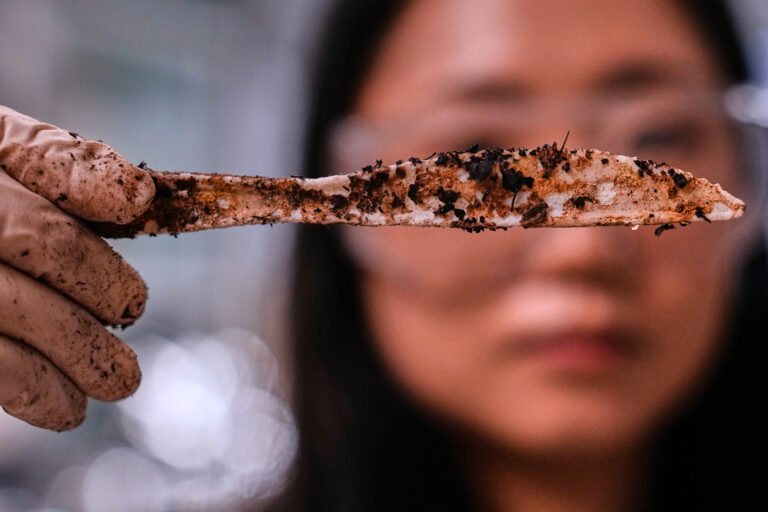
At a Massachusetts laboratory, sugar-based plastic pellets are being transformed into forks, films and other products designed to break down in compost rather than persist as microplastics in the environment.
CJ Biomaterials ferments sugar to create plant-based polymers that microbes will consume. The company's Woburn facility has produced compostable cutlery, straws, coated cups and food containers. Lab tests show these items degrading in compost within weeks to months, while traditional plastic persists for decades or centuries, fragmenting into harmful microplastics found in oceans, air, food, water and human tissues.
Bioplastics are either biobased - made from renewable resources like corn or sugar cane - or biodegradable, breaking down through natural processes. CJ Biomaterials produces polyhydroxyalkanoates, or PHAs, polymers that are both marine and soil biodegradable. The company feeds sugar to microbes that convert it to PHA, then sells the resulting pellets to manufacturers. These same bacteria consume the material in compost piles, breaking it down within six months, according to marketing director Leah Ford.
"I've been doing this for a long time and the compostability has always been a really strong driver. But with the greater understanding of microplastics, I think, that's going to change how people think about materials," Ford said.
Bioplastics currently represent roughly 0.5% of global plastic production but are projected to double by 2030. Large restaurant chains and sports stadiums are experimenting with biobased packaging. However, adoption faces obstacles: bioplastics typically cost more than conventional plastics, municipal composting programs are limited in many areas, and the materials can be mistaken for traditional plastics at facilities.
Research from the 5 Gyres Institute found that biodegradable materials largely disappeared or showed significant degradation over 64 weeks in various environments, while traditional plastic spoons remained largely intact. The institute's co-founder, Marcus Eriksen, stated that without biodegradable options, "we're going to flood the entire biosphere with micro- and nanoplastics."
Environmental groups remain divided. The World Wildlife Fund views bioplastics as part of a necessary suite of solutions, while other organizations argue they perpetuate single-use consumption and divert farmland from food production.
Sources