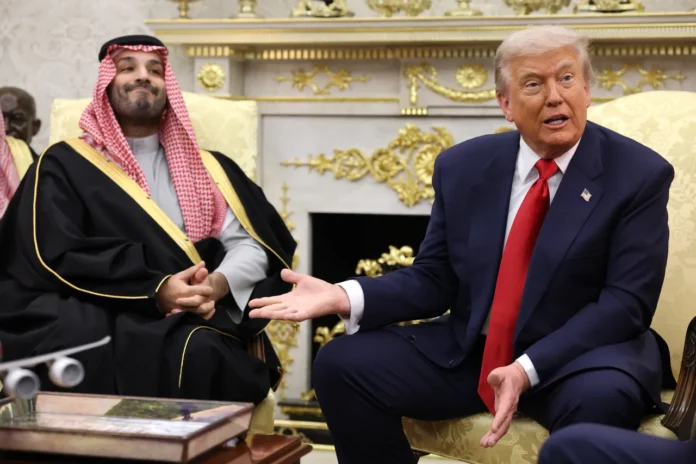
The United States and Saudi Arabia have formalized a landmark civil nuclear partnership following the signing of a cooperation agreement by senior officials from both nations. US Energy Secretary Chris Wright and Saudi Energy Minister Prince Abdulaziz bin Salman executed the accord, which establishes a framework for peaceful nuclear cooperation and is expected to deepen strategic and commercial ties between the countries.
The agreement, known as a "123 agreement" Under the Atomic Energy Act of 1954, was signed alongside a bilateral safeguards agreement. Together, these documents create the legal structure for a multi-billion-dollar partnership while reaffirming both nations' commitment to international nuclear nonproliferation standards.
The arrangement provides American companies substantial opportunities to participate in developing Saudi Arabia's civilian nuclear energy sector. US officials stated the agreement will generate business for American manufacturers, strengthen domestic supply chains, support industrial jobs, and help Saudi Arabia address its growing long-term electricity needs. Officials also said it strengthens security in the United States and the Middle East through strict nuclear safety, security, and nonproliferation standards, while enhancing the global competitiveness of American nuclear technology.
"These agreements reflect our two nations' shared commitment to strengthening US-Saudi commercial relations, delivering prosperity at home and security to our allies abroad," Secretary Wright said. "Rest assured, these agreements uphold the highest standards of nuclear safety and nonproliferation, while relying on the world's best nuclear technology and scientists, designed right here in the United States. Thanks to President Trump, the American nuclear renaissance is underway and will deliver long-term benefits to the American and Saudi people."
The agreement will be submitted to Congress for required review before proceeding. According to reporting, the arrangement gives US companies a dominant role in building Saudi Arabia's civilian nuclear infrastructure while limiting competing foreign firms. A key provision would allow American companies to build a uranium enrichment facility in Saudi Arabia if a joint feasibility study determines it is practical, with American supervision ensuring the program remains civilian.
The agreement has drawn opposition from some pro-Israel groups. The Zionist Organization of America called on Congress to reject it, arguing it could accelerate nuclear proliferation in the region. ZOA National President Morton A. Klein described the proposed agreement as "a serious, dangerous mistake," Arguing that it "seems likely to lead to widespread nuclear proliferation throughout the Middle East and redouble Iran's determination to rapidly obtain nuclear weapons at all costs."
Saudi Arabia has maintained that developing a civilian nuclear program is essential to capitalize on its uranium reserves and diversify energy production. Officials say greater reliance on nuclear power would reduce domestic oil consumption, allowing the kingdom to export more crude and increase government revenues. Crown Prince Mohammed bin Salman declared in 2018 that if Iran were to develop a nuclear weapon, Saudi Arabia would pursue one as well.