Trump Says U.S. Taking 'Low-Key' Approach as Iran Drags Out Talks and Raises Demands
President Donald Trump said Sunday that the United States is stepping back from military pressure on Iran while maintaining economic pressure as Tehran delays negotiations over the Strait of Hormuz and presents new demands to Washington.
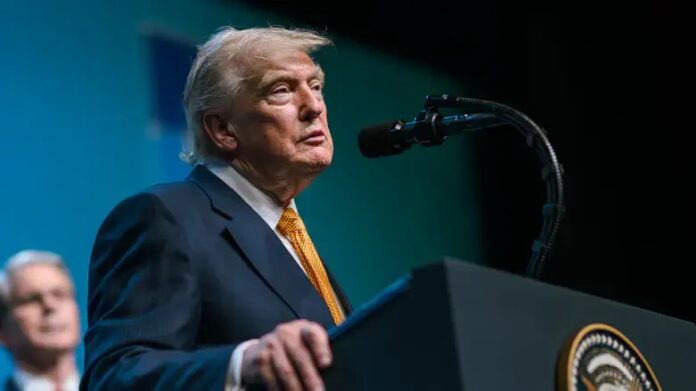
President Donald Trump said Sunday that the United States is stepping back from military pressure on Iran while maintaining economic pressure as Tehran delays negotiations over the Strait of Hormuz and presents new demands to Washington.
In a telephone interview with Axios, Trump characterized the administration's approach as limited engagement with Iran paired with close monitoring of Tehran's economic deterioration. "We are low-keying it," Trump said.
Trump stated that Iran's financial condition is worsening, with the regime struggling to pay its military. He attributed additional economic strain to the U.S. Naval blockade. He noted that American consumers face reduced economic impact from the conflict as oil prices remain just above $75 per barrel.
"It will work out. It always works out. It's like a chess game," Trump said.
Iran has been postponing an agreement involving Iran, Oman, and the United States regarding reopening the Strait of Hormuz, under which Iran would receive partial authority over maritime traffic through the shipping lane.
On Saturday, Mohammad Bagher Zolghadr, head of Iran's Supreme National Security Council, presented new conditions for restoring full strait access. These included a permanent end to the war against Iran and its allies, removal of the U.S. Naval blockade, withdrawal of American military forces from the region, and compensation for damages Iran claims to have suffered. Iranian officials also demanded the lifting of all U.S. Sanctions and the release of frozen Iranian financial assets.
According to U.S. Officials, Trump had considered large-scale military operations against Iran last week before deciding to pursue de-escalation instead.
One administration official said the pause in fighting has prevented Iran's leadership from attributing its economic collapse solely to war, forcing the regime to confront its deteriorating finances. The official also said approximately 8 million barrels of oil currently pass through the southern shipping lane nightly under U.S. Military coordination, with Washington intending to increase that volume if an agreement remains unresolved.
Vice President JD Vance said the conflict has not ended and emphasized that the administration continues using diplomatic, economic, and military tools to pursue what it considers the best outcome for the United States.
Sources