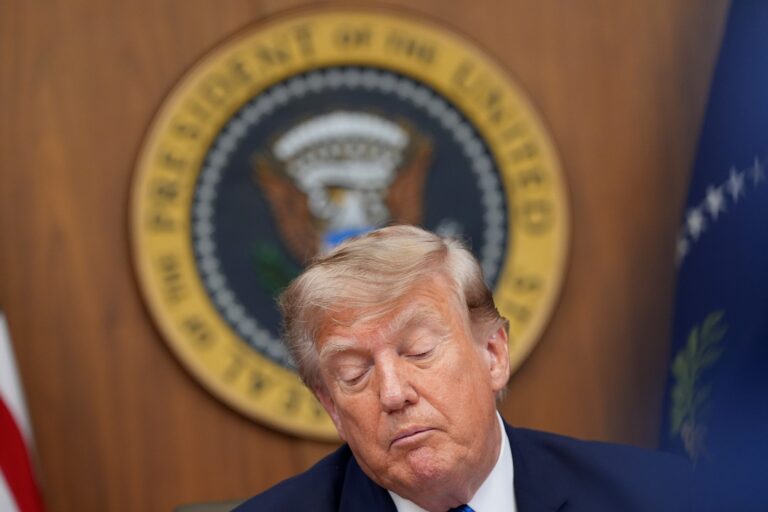
President Donald Trump has faced difficulty achieving the interest rate cuts he has publicly advocated for since returning to office.
Trump has criticized high interest rates as harmful to the U.S. Economy and argued the country deserves the lowest borrowing costs globally. He spent months pressing the Federal Reserve to reduce its benchmark rates, characterizing such cuts as "Rocket Fuel!" For economic growth and affordability in housing.
Since late February, when conflict in Iran began, borrowing costs have risen instead. This has priced more families out of mortgages and auto loans. The federal government has also felt the strain, spending $827 billion this fiscal year servicing national debt - exceeding spending on national defense.
Kevin Warsh, Trump's choice as Federal Reserve chair, acknowledged in his second press conference that inflation remains elevated but provided no clear path forward. Interest rates on 30-year Treasury bonds have climbed to levels not seen in nearly two decades, contradicting Trump's campaign promises. The 10-year Treasury rate exceeded 4.7% on Friday, surpassing what Trump inherited when he took office.
Trump has largely sidestepped the rate increases, declaring the economy thriving despite recent reports showing annual growth of 1.5% over three months. At a Friday Cabinet meeting, he stated, "We have the most successful environment that we've ever had."
White House spokesman Kush Desai said resolution of the Iran conflict would lower energy costs and create conditions for Fed rate reductions. "Oil prices, and thus overall inflation, will plummet again when President Trump forces a successful resolution with Iran, further paving the way for additional interest rate cuts by the Federal Reserve," Desai said.
Higher borrowing costs have become a political liability heading into midterm elections. Trump's own policies - tariffs, support for data center construction, and regional conflict - have contributed to rising rates. Republicans anticipated demonstrating affordability gains to voters but have struggled to build momentum on this message.
Research from Georgetown University and UC Berkeley indicates voters prioritize whether wage growth keeps pace with inflation. Over the past year, inflation has nearly matched hourly wage increases. The administration directed mortgage firms Freddie Mac and Fannie Mae to purchase $200 billion in home loans to reduce mortgage rates, yet 30-year rates averaged 6.66% as of Thursday, essentially unchanged year-over-year.
Warsh has indicated preference for allowing markets to set rates rather than relying on central bank action. The Fed's benchmark rate has remained steady, but markets independently have demanded higher yields on government debt. The next Fed rate decision concludes September 16, with market expectations currently pointing toward a rate increase.