Israel prepared overnight Friday for the possibility of a major American military strike against Iran as the United States positioned forces in the region for a potential large-scale operation, even as President Donald Trump left open the possibility of diplomacy.
An Israeli official told Kan News that Israeli defense planners anticipated a U.S. Attack on Iran could trigger Iranian missile strikes against Israel, potentially drawing Jerusalem into a broader military campaign against Iranian targets.
The official said Israeli assessments indicate that Trump postponed a previous deadline for deciding on military action to give Tehran another chance to return to negotiations. However, the United States continued building up regional forces capable of launching a major offensive on short notice if the President chose to proceed.
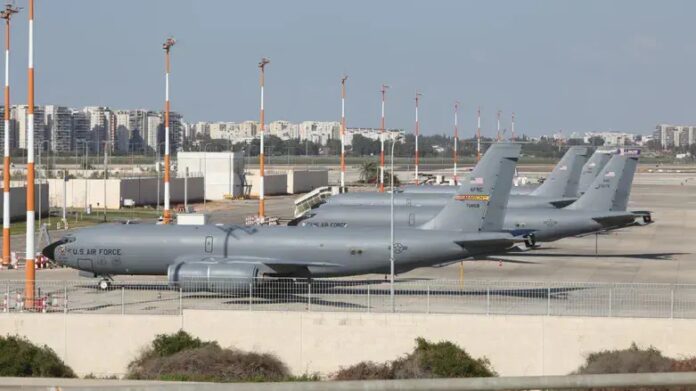
Kan News reported that in recent weeks the United States deployed dozens of aerial refueling aircraft, fighter jets, air defense interceptor systems, and additional munitions throughout the region. Approximately 90 American KC-135 refueling aircraft arrived in Israel over the past two weeks and were stationed at Ben Gurion Airport, Ramon Airport, and Ovda Air Base. The deployment scale was compared to the military buildup during Operation Roaring Lion.
Prime Minister Binyomin Netanyahu's office announced he was expected to travel to Washington next week for talks with President Trump at the White House.
Senior Israeli officials reportedly believed that Iran's Supreme Leader, Mojtaba Khamenei, adopted a hard-line negotiating position making agreement increasingly difficult. According to those officials, the prospect of coordinated military action by the United States and Israel could strengthen Washington's use in future negotiations with Tehran.
The New York Times reported that Iran rejected a ceasefire proposal delivered by Iraqi Prime Minister Ali al-Zaidi. Iranian sources cited by the newspaper said Tehran refused to consider a temporary ceasefire that did not fully resolve the dispute over freedom of navigation through the Strait of Hormuz. The Iraqi prime minister's office denied the report, calling it "baseless."