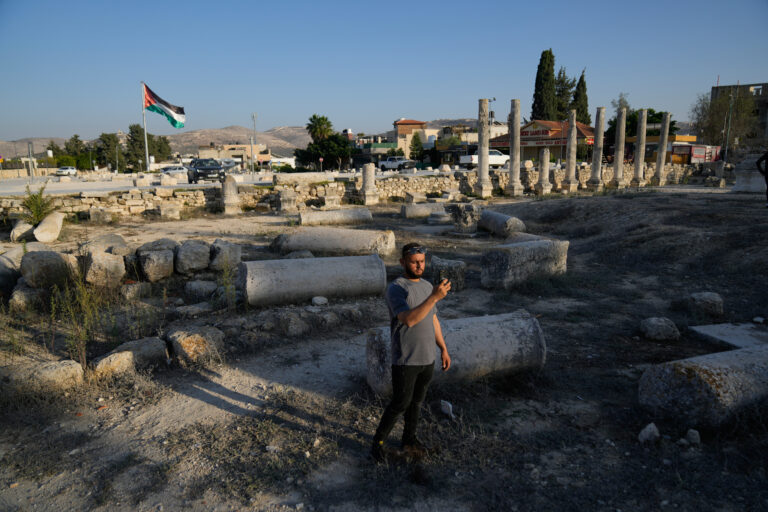
A United Nations committee voted Friday to add the archaeological site of Sebastia in the West Bank and five castles in southern Lebanon's Mount Amel region to the World Heritage List and the List of World Heritage in Danger.
The decision came during a UNESCO meeting in Busan, South Korea, where the committee reviewed the nominations on an emergency basis, citing ongoing conflict in the Middle East.
Sebastia, located about 10 kilometers northwest of Nablus, is identified by scholars as ancient Samaria, the capital of the biblical Kingdom of Israel. The site contains archaeological remains from the Iron Age, Roman, Byzantine and Islamic periods. According to UNESCO, Christian and Islamic tradition also identifies the site as the burial place of John the Baptist. The Palestinian delegation first submitted Sebastia's nomination to UNESCO in 2012, saying World Heritage status would help preserve and conserve the site.
The five castles in the Mount Amel region were recognized for their architectural heritage, which reflects Crusader, Ayyubid, Mamluk and local influences and the evolution of fortified architecture over nearly nine centuries, according to UNESCO.
Israel opposed the nominations, saying they politicized cultural heritage and objecting to the emergency listing process. Israel also raised concerns about Beaufort Castle, one of the five castles included in the designation.
The UNESCO committee also added the ancient Phoenician city of Tyre in southern Lebanon to the List of World Heritage in Danger.