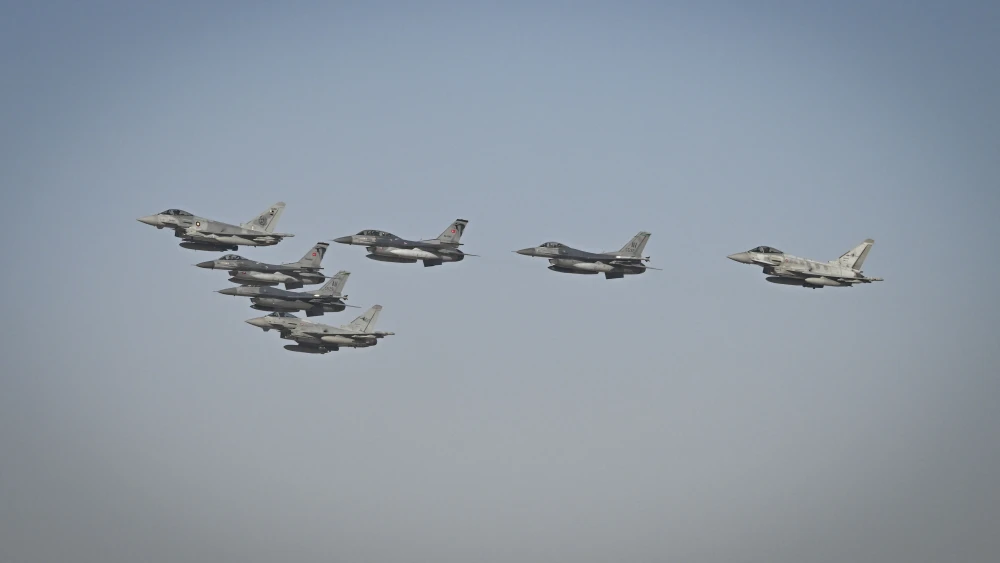
Israel's multi-layered air-defense system provides American aircraft stationed in the country with superior protection compared to other Middle Eastern locations, according to a former Israeli Air Force officer. Lt. Col. (res.) Ron Tira, a reservist in the Israel Air Force's Campaign Planning Department, attributed the increasing deployment of U.S. Assets to Israeli bases to lessons learned during the recent conflict. He noted that American forces observed that bases closer to Iran sustained heavier attacks, making locations operating at ranges of 1,000 kilometers or more strategically advantageous for base defense.
Tira characterized Israel's defensive capabilities as unmatched. "Israel can offer the most saturated missile defense array in the world, and therefore assets located in Israel are more protected than in other places that have 'local defense' against missiles but not a saturated, multi-layered array, rich in resources, multi-directional, and so on, like in Israel," He stated.
Defense Minister Israel Katz confirmed that American aircraft refuel in Israel before conducting strikes on Iran, saying "The Iranians fire at everything that exists in the area except for one country, the State of Israel. They know that American planes take off from here and refuel here to attack."
Multiple reports documented significant U.S. Military presence at Israeli facilities. Reuters reported that the U.S. Had stationed dozens of refueling aircraft in Israel since the conflict began, with 98 military aircraft in the country as of late June. Additional refueling aircraft arrived in later weeks. Israel relocated refuelers from Ben-Gurion Airport to southern bases to preserve civilian air traffic operations.
A defense analysis organization assessed that southern Israeli bases could accommodate hundreds of American aircraft and thousands of personnel during major operations, with satellite imagery documenting damage to U.S. Military sites across multiple Gulf locations during the conflict.
A retired U.S. Air Force general suggested that a formal defense agreement between the nations could strengthen regional security arrangements, though he acknowledged Israeli hesitation regarding potential constraints on independent military operations.