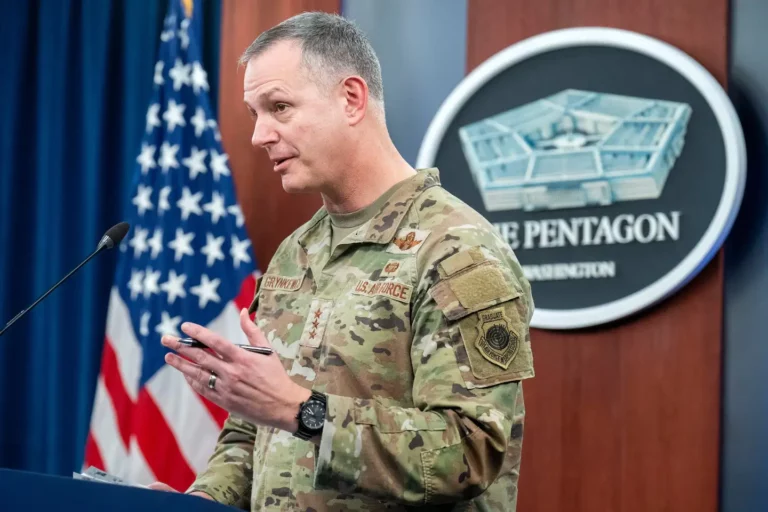
The commander of U.S. European Command has alerted Pentagon leadership to a shortage of naval assets, warning that he may lack sufficient resources to simultaneously defend Israel against ballistic missile attacks and fulfill broader U.S. Defense obligations, according to The Washington Post.
Gen. Alexus Grynkewich submitted a written warning to senior Pentagon officials this week stating that without an additional destroyer, he may be forced to prioritize defending U.S. Territory over defending Israel.
The alert follows five months of military operations tied to Iran that have strained the U.S. Navy. American destroyers in the eastern Mediterranean have intercepted ballistic missiles launched from Iran and Yemen while defending Israel. Concurrently, U.S. Naval forces have enforced a maritime blockade around Iranian ports and secured commercial shipping through the Strait of Hormuz.
The high operational tempo has created maintenance challenges and reduced availability of the five destroyers based at Naval Station Rota in Spain, with a sixth expected to arrive later this year.
A May Pentagon assessment found that U.S. Forces bore much of the burden defending Israel, with Terminal High Altitude Area Defense systems and destroyer-launched missile interceptors used far more extensively than Israel's own air defense systems.
As of Friday, two destroyers operated in the Mediterranean while three remained at Rota. In the Arabian Sea, two aircraft carriers and at least 15 additional warships, including 11 destroyers, participated in operations enforcing the Iranian blockade and protecting maritime traffic through the Strait of Hormuz. Another destroyer was deployed in the Red Sea to counter threats from Yemen's Houthi rebels.
A U.S. Defense official said Grynkewich's warning followed standard military procedure for commanders to alert Pentagon leadership about operational risks and resource gaps. The Pentagon and U.S. European Command declined comment.