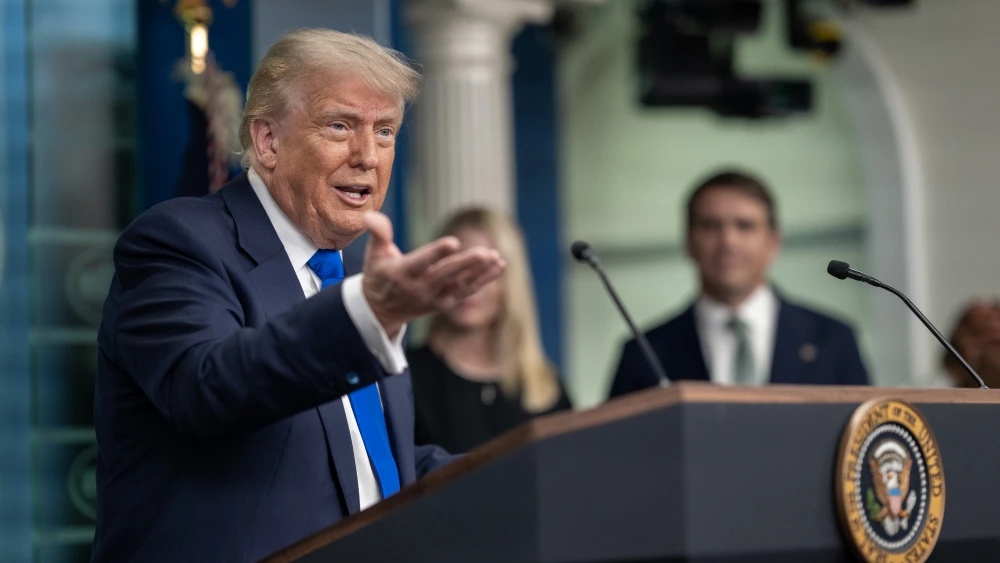
President Donald Trump had an opportunity during a July 16 primetime address to explain to Americans the strategic rationale behind military confrontation with Iran and its importance to national security. The moment was not used for that purpose.
Before the speech, observers argued that Americans warrant more than assurances of control. They deserve clear explanation of why confronting Iran serves U.S. National security interests and why this conflict differs from prolonged Middle East wars. This distinction matters as the Iran debate has become partisan, though the strategic argument should not be.
After two decades of costly military engagements, Americans harbor legitimate skepticism about military action. However, they can be receptive if a president explains the mission, its stakes and the need for patience.
The president could have noted that Iran has been in conflict with the United States for nearly fifty years, with its regime and proxies responsible for American military deaths, attacks on allies and assaults on international shipping. Iran remains designated as the world's leading state sponsor of terrorism.
The president could also have emphasized that a nuclear Iran would fundamentally alter regional dynamics. Such a capability would threaten not only Israel and Arab partners but would embolden the entire region, provide protection for Iran's terrorist operations and make future military intervention substantially more dangerous and costly. Delaying action increases the risk of larger conflict later.
The address could have contextualized Iran within broader geopolitical competition. China observes American actions in the Persian Gulf, and if it perceives Washington lacking political resolve to counter an expansionist jihadist regime, it may prove more willing to challenge the United States in the Taiwan Strait.
American military power alone cannot secure lasting victory. Washington's strongest use lies with the Iranian population itself - tens of millions who oppose the regime that has oppressed them for nearly fifty years. Economic pressure combined with support for Iranian opposition forces could compel the regime's leadership to confront the threat it fears most: domestic uprising.
Iran's strategy centers on patience. Tehran understands that Trump formally notified Congress on July 10 of resumed hostilities, activating the War Powers Resolution timeline. Without congressional authorization, a critical deadline arrives in early October, weeks before midterm elections. The regime need not achieve military victory - it must only outlast American political attention.
The president retains opportunity to make this case. Explaining how preventing nuclear capability avoids larger war, how adversaries increasingly coordinate, and how supporting Iranian opposition provides long-term strategic advantage could secure public support. Without such clarity, Iran's waiting strategy becomes more viable.