Why democracies keep looking for kings
Every democracy faces a recurring crisis: manageable problems become entrenched, public trust declines, institutions lose credibility, and political divisions intensify. In these moments, politics becomes deeply personal, with elections shifting from contests of ideas to searches for an individual capable of restoring lost conditions.
Every democracy faces a recurring crisis: manageable problems become entrenched, public trust declines, institutions lose credibility, and political divisions intensify. In these moments, politics becomes deeply personal, with elections shifting from contests of ideas to searches for an individual capable of restoring lost conditions.
This hope is not without foundation. Leadership has shaped history - figures like Winston Churchill and David Ben-Gurion demonstrably altered national trajectories through their qualities and decisions.
Yet difficulties emerge when societies expect leaders to accomplish what political systems were never designed to achieve. Governments can defend borders, enforce laws and build institutions, but cannot manufacture the civic character these functions require. They cannot legislate responsibility or replace families, communities and citizens who must assume responsibility themselves. As these foundations weaken, political expectations paradoxically grow.
This environment breeds populism. Simple solutions appeal because they locate both problem and remedy outside oneself: find the right leader, defeat the right opponent, change the right institution, and resolution follows. This simplicity attracts but also fails, since problems rooted in history, culture and human behavior resist quick fixes.
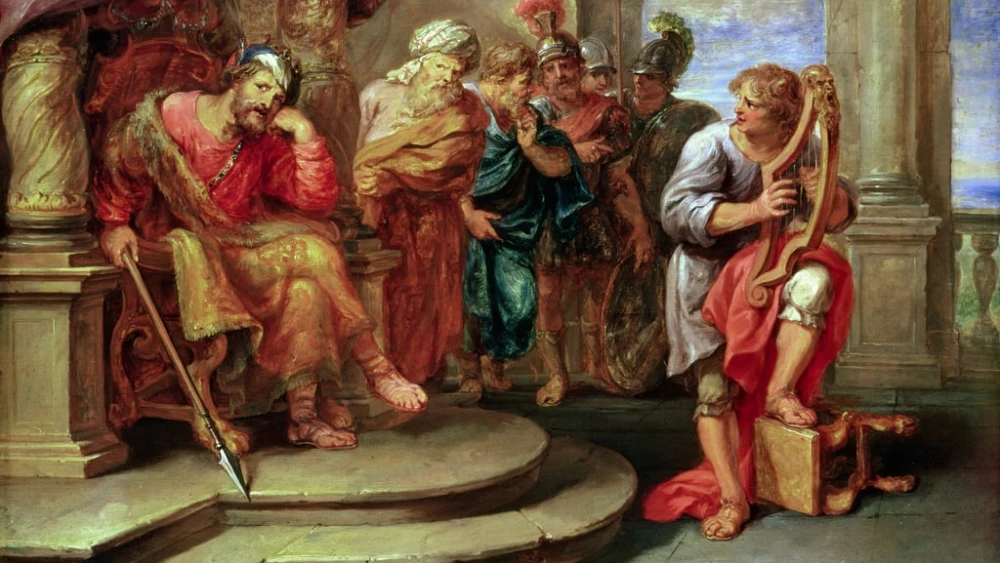
The Torah addresses a strikingly parallel situation. When Israel's elders ask the prophet Samuel to appoint "a king to judge us like all the nations," God responds: "It is not you they have rejected, but Me as their king." Rather than explaining the proposal's flaws, God instructs Samuel to recall "all the deeds they have done from the day I brought them up out of Egypt until this day"-suggesting the request for kingship reflects a deeper struggle with moving from dependence to responsibility.
When Moses disappears on Mount Sinai, the people demand something tangible to "go before us," Resulting in the Golden Calf. At the Promised Land's threshold, confronted with fighting and settlement, they propose appointing a leader to return to Egypt. Later, after military defeat by the Philistines, the elders initially ask why God had defeated them, but quickly seek an external remedy, bringing the Ark of the Covenant into battle so "It may come among us and save us from the hand of our enemies." Israel lost again; the ark was captured.
In this context, the kingship request reflects not opposition to monarchy itself, which Deuteronomy explicitly anticipates, but what people expect political leadership to accomplish. The Torah's phrasing is notably personal: "You shall surely appoint over yourself a king." The king faces immediate constraints - limits on wealth, horses and wives, and obligation to keep the Torah scroll. Biblical kingship neither rejects leadership nor invites surrendering responsibility to it; instead, it embeds leadership within a culture of obligation.
Modern democracies appropriately focus on their leaders, whose decisions significantly matter. But political leadership cannot substitute for the cultural foundations healthy political life requires. Laws and institutions operate within societies whose habits, commitments and willingness to assume responsibility cannot be imposed from above.
Perhaps the order has been reversed. Societies expend enormous effort seeking leaders capable of creating the desired society, when the more durable task involves creating societies capable of producing the leaders they need. A culture of responsibility produces better citizens and, over time, shapes the expectations, institutions and character from which leadership emerges.
A worthy society does not await worthy leaders to build it. It builds the foundations upon which worthy leaders can stand.
Sources