Houston, We Have a Halachic Problem!
A solar eclipse on Wednesday afternoon marked the astronomical new moon at approximately 1:37 p.m., but the announced molad in synagogues was set for Thursday at 1:15 a.m., nearly twelve hours later.
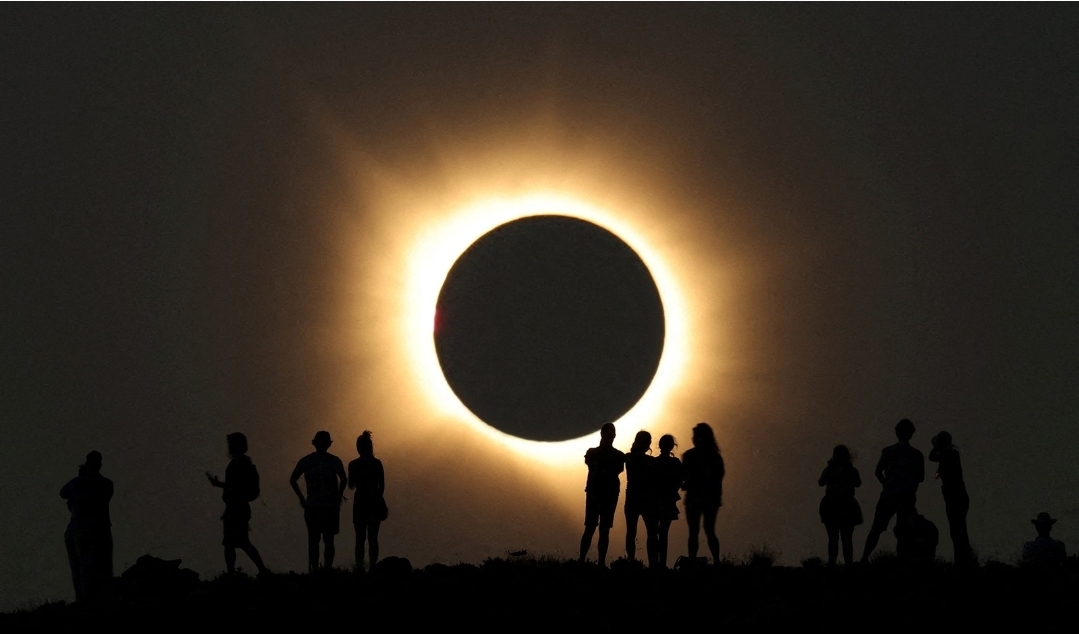
A solar eclipse on Wednesday afternoon marked the astronomical new moon at approximately 1:37 p.m., but the announced molad in synagogues was set for Thursday at 1:15 a.m., nearly twelve hours later. This discrepancy raises a practical question: when calculating the required 72 hours before reciting Kiddush Levana, should one count from the actual molad or the announced one?
The announced molad, known as the molad ha'emtza'i or average molad, is a fixed arithmetic calculation established around 400 CE by Hillel the Second. It was never designed to reflect the moon's actual position, which varies considerably month to month. The true new moon regularly runs early or late by up to fourteen hours.
According to the TaZ, the determining factor is not mathematical calculation but rather when a person can benefit from the moon's light. The Mishnah Berurah agrees, stating the three days represent when the moon has grown bright enough to be usable. When the calendar's fixed calculation and observable reality diverge, and the physical fact is plainly visible, the physical fact should prevail. By Saturday evening, the moon will be approximately three days and seven hours old with visible illumination, and the eclipse provides observed evidence of the true molad.
However, the counterargument carries weight. The entire Jewish calendar now operates on the average molad, determining Rosh Chodesh, holidays, and yahrtzeits. The "three days" Was deliberately rough; different authorities cite three or seven days. Injecting astronomical precision into an inherently imprecise measure represents a departure. Also, consistency concerns arise: if the real molad governs when it falls earlier, should compensation occur when it falls later?
A separate consideration involves waiting for Saturday evening specifically. According to the Shulchan Aruch, Kiddush Levana should ideally be recited on Saturday evening when one is refreshed and well-dressed, but only if it falls before the tenth of the month; later dates risk the moon becoming obscured for days. Various authorities disagree on whether delaying for better performance is permitted or whether the mitzvah should be performed immediately once three days pass.
Notably, on this particular week, both approaches converge. Those who insist on performing immediately once three days have genuinely elapsed would point to Saturday evening using the real molad. Those who prefer Saturday evening's dignified conditions also point to Saturday evening. Also, a position attributed to the Ya'avetz permits the blessing if the 72-hour mark arrives during any night, and Sunday's 1:15 a.m. Falls within the night of Saturday evening.
A practical detail often overlooked: a three-day-old moon sets roughly two and a half to three hours after sunset. In the New York area this Saturday evening, with sunset near 7:55 p.m., the moon will likely disappear by approximately 10:15 to 10:45 p.m. Therefore, waiting until the announced molad's 1:15 a.m. Sunday would find no moon in the sky.
Multiple grounds support reciting Kiddush Levana on Saturday evening: the physical moon has brightened sufficiently, the eclipse provides undisputed evidence of the true molad, seventy-two actual hours will have passed, respected authorities actively encourage performing it at the first opportunity, and the Shulchan Aruch's preference for Saturday evening's conditions provides additional reason.
The final opportunity to recite Kiddush Levana this month extends until approximately August 27. Anyone wishing to avoid the dispute may simply wait for Sunday evening, when both reckonings align and the moon remains visible longer.
Sources