Probably the Most Comprehensive Sefer on the Churban, Ever
A new Torah work titled "B'Ikvei HaGalus" Comprises over 700 pages and is structured as a detailed commentary on Perek HaNizakin in tractate Gittin. Written by Rabbi Yaakov Beer, an Avreich in BMG and grandson of Rav Mordechai Gifter, the sefer examines questions in the passage while exploring responses from earlier and later commentators, contrasting different interpretations with analytical depth.
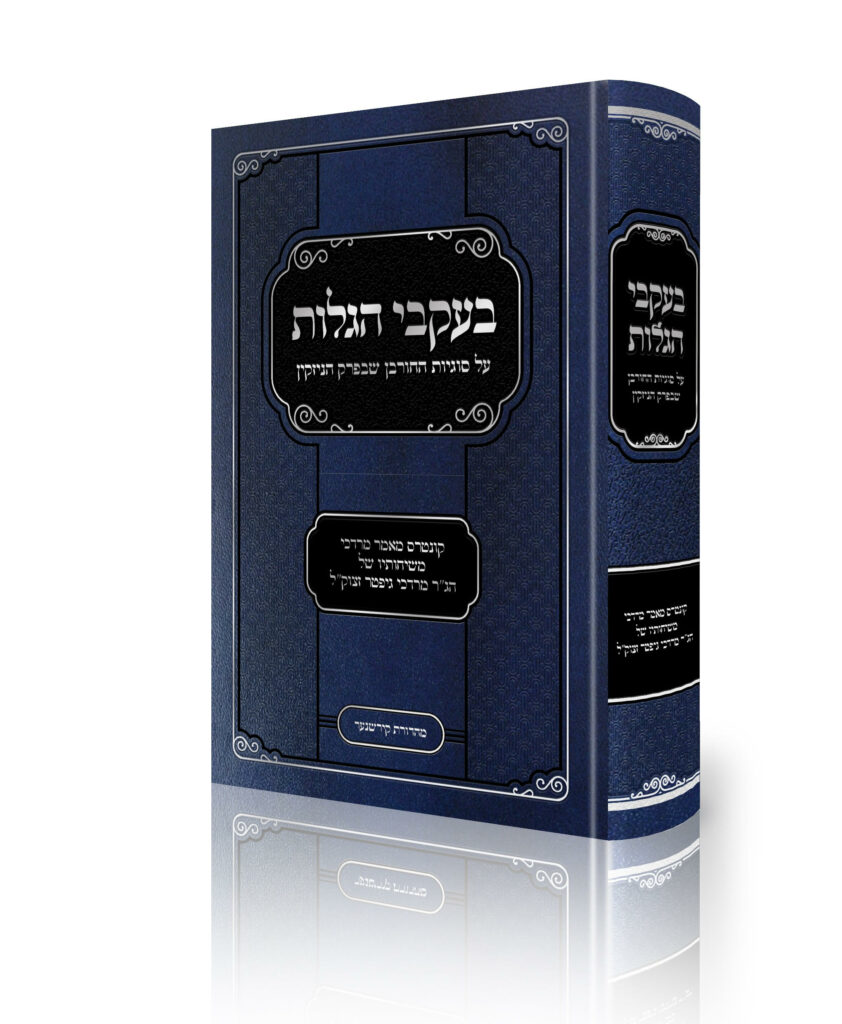
A new Torah work titled "B'Ikvei HaGalus" Comprises over 700 pages and is structured as a detailed commentary on Perek HaNizakin in tractate Gittin. Written by Rabbi Yaakov Beer, an Avreich in BMG and grandson of Rav Mordechai Gifter, the sefer examines questions in the passage while exploring responses from earlier and later commentators, contrasting different interpretations with analytical depth.
The work's thoroughness is evident in its treatment of the Kamtza and Bar Kamtza incident. Rather than accepting a single explanation for why Kamtza is blamed in the story, the author explores no fewer than seven varying interpretations. These include the Iyun Yaakov's view that excessive feasting and mishandling of important matters by incompetent people caused later events; the Ben Yehoyada's explanation that failure to distinguish details led to Jerusalem's destruction; and the Maharal's teaching that an atmosphere of baseless hatred, symbolized in Kamtza's very name, underlay the friendship.
The Chidushei haRim's approach, as transmitted by his grandson the Imrei Emes, holds that Kamtza should not have attended without a proper invitation, and that his presence misled Bar Kamtza into believing his own attendance was intentional. The author also proposes his own interpretation based on Jerusalem's custom of extending two invitations to guests. The Maharsha and Rav Avigdor Miller present an additional theory that Kamtza and Bar Kamtza were father and son, with the father blamed for failing to prevent his son's alignment with pro-Herodian interests.
The sefer continues to examine other significant issues within the chapter with comparable clarity. The work is available at Jewish bookstores.
Sources