Rambam In-Depth: Invalid Maaser Beheima Can Become Holy
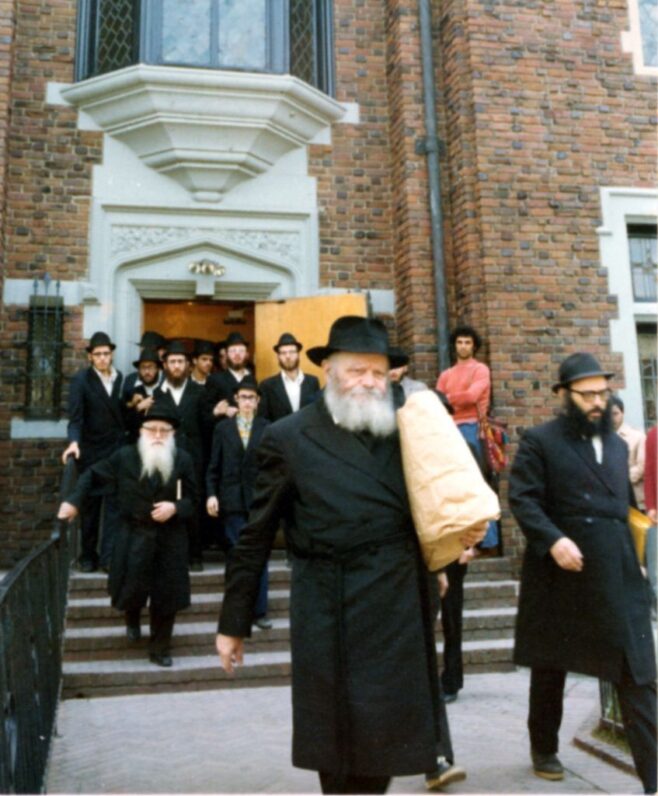
Rabbi Heschel Greenberg has launched a new series of classes on the Rambam's Mishneh Torah following the Rebbe's call to learn at least one halacha in depth.

Rabbi Heschel Greenberg has launched a new series of classes on the Rambam's Mishneh Torah following the Rebbe's call to learn at least one halacha in depth.
The Rebbe initiated an effort to unite all Jews in studying the encyclopedic Mishneh Torah, offering multiple approaches: learning three chapters daily to complete the work in under a year, learning one chapter to finish in approximately three years, or studying Sefer Hamitzvos, Maimonides' companion work. The Rebbe also requested that learners study one halacha in depth.
With the recent start of the 46th cycle of Mishneh Torah study, Rabbi Greenberg began recording brief classes on selected passages from the text. Rabbi Greenberg, a shliach of the Rebbe in Buffalo, New York, and director of the Jewish Discovery Center, has taught thousands of classes spanning all aspects of Jewish knowledge over more than 50 years. He has authored numerous works on various subjects, including several volumes of commentary on the Mishneh Torah. His classes are available on his website, rabbigreenberg.com.
According to the Rambam, an invalid tithe can still confer holiness. His ruling on Maaser Beheima illustrates this principle. The Rambam rules that animals born in one year cannot be used to fulfill the tithing obligation of another year - mirroring the law for produce, where old produce cannot cover new obligations or vice versa. This ruling derives from a textual comparison in the Torah between the tithing of animals and the tithing of produce, each of which must be performed year by year, independently.
Sources